HAVE ANY QUESTIONS?
  15 YEARS OF EXPERIENCE

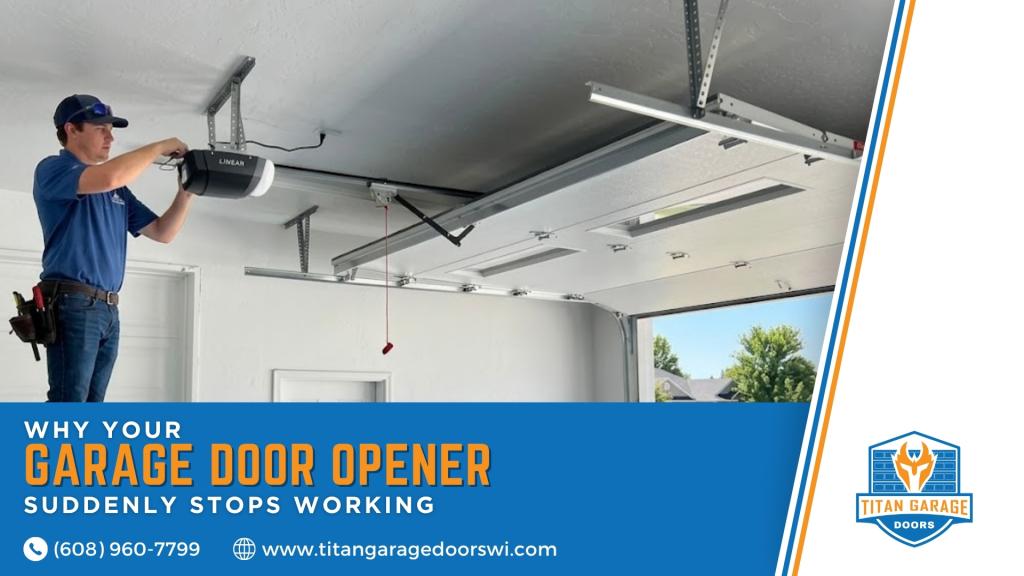
A garage door opener can fail at the worst time. Maybe your car is trapped inside or the door is stuck open when you need to leave. That loss of access feels stressful when you cannot tell whether the issue is small or unsafe. Many garage door opener problems start with a power, signal, or sensor issue. Others point to a heavy door, worn parts, or a failing opener.
Quick answer: A garage door opener may stop working because of a dead remote battery, tripped breaker, blocked safety sensors, worn internal parts, or a door that is too heavy to lift. You can safely check a few basics. However, leave springs, cables, tracks, and electrical repairs to a trained technician.
Common Garage Door Opener Problems That Stop Your Door
Your opener and garage door work as one system. Therefore, the problem is not always inside the motor. A weak spring, worn rollers, damaged track, or unbalanced door can make the opener strain or stop.
Start by noticing what happens when you press the remote or wall button. Does the unit stay silent, click, hum, or try to move the door? That detail can help narrow down the cause.
1. No Power at the Opener Motor Unit
When the opener has no lights, sound, or response, check the easy things first. Make sure it is plugged in securely. Then check the outlet, nearby GFCI outlet, and garage circuit breaker. A power surge can trip a breaker or affect the opener controls.
Next, check the wall button. A damaged wire can stop it from working while the remote still works. Do not open the motor housing or touch exposed wiring. If the outlet has power but the opener stays dead, schedule an inspection.
2. The Motor Hums but Nothing Moves
A humming motor usually means the unit has power but cannot move the door. The trolley may be disengaged, the drive gear may be worn, or the door may be too heavy for the opener to lift. A broken torsion spring can make a door feel extremely heavy.
Stop pressing the remote repeatedly. It can overheat the motor and worsen damage. Check whether the emergency release cord was pulled. A disconnected trolley lets the opener run without moving the door.
Do not reconnect the trolley when the door is open, crooked, or hard to move. If the door is heavy, uneven, or has a broken spring, call a technician for reliable garage spring repair. Springs and cables are under high tension.
3. When the Remote or Wall Button Does Not Respond
When only the remote fails, replace its batteries first. Then test it while standing close to the garage. A weak battery, damaged remote, or lost programming can block the signal. Also check whether the lock or vacation setting on the wall console is turned on.
When both controls fail, the opener may have a power, wiring, or logic-board issue. Check the opener light and breaker first. If the wall control works but the remote does not, reprogramming may solve it.
Safe Checks for Garage Door Opener Problems
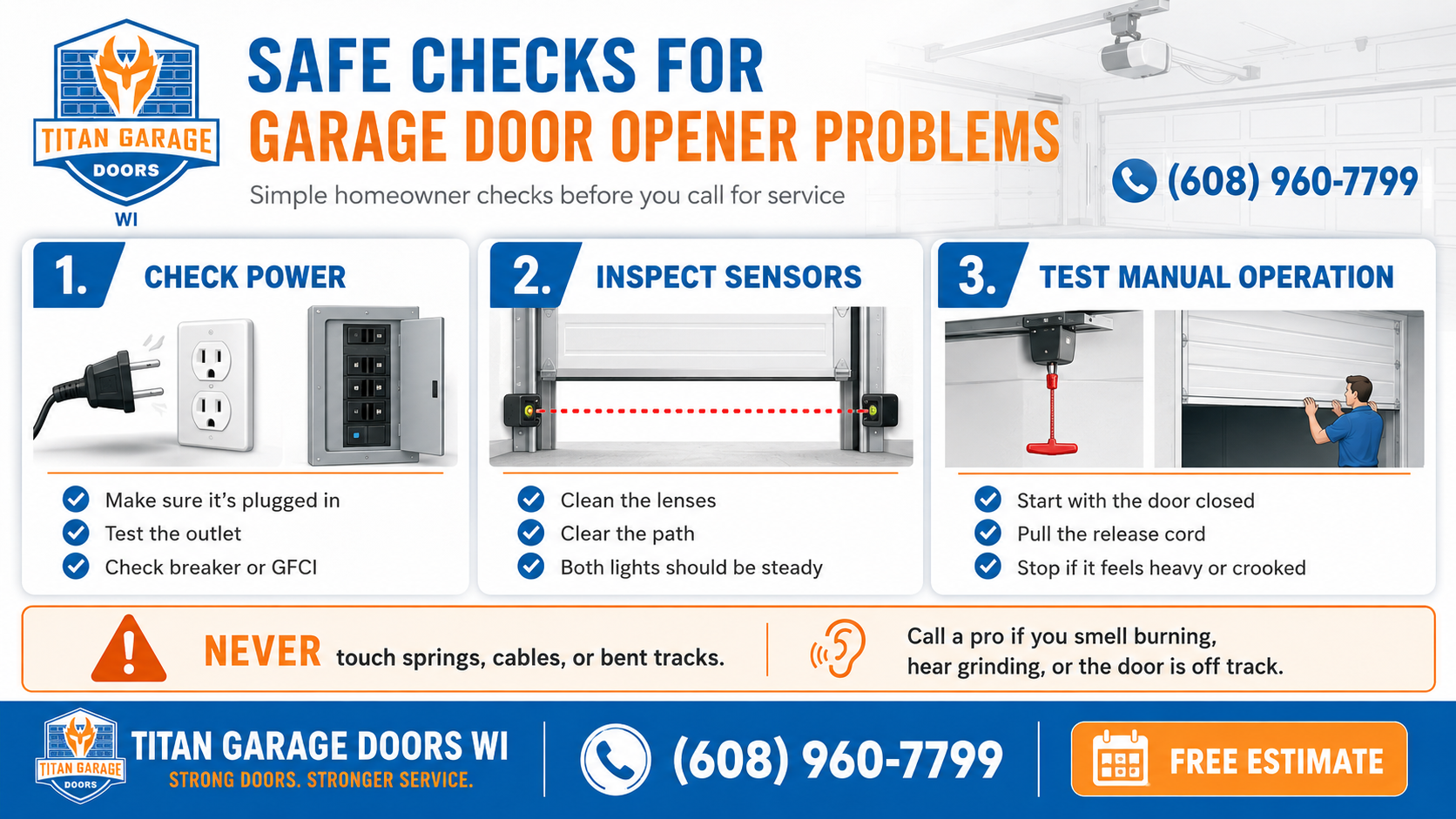
A few safe checks can help you explain the failure clearly when you call for service. They may also solve a small issue without putting you at risk. Keep your hands away from springs, cables, rollers, hinges, and the opener rail while testing the system.
1. Check Power, Plug, and Breaker
Confirm that the opener is plugged in and the outlet has power. Test the outlet with another safe household device if needed. Then check the breaker panel and any reset button on a nearby GFCI outlet.
Stop testing if you smell burning, see melted plastic, or hear a buzzing electrical sound. Those signs call for professional garage door opener repair.
2. Inspect the Safety Sensors
Safety sensors sit near the bottom of the tracks. They prevent the door from closing on a person, pet, or object. Wipe the lenses and remove anything blocking their path. Then make sure both lights are steady and facing each other.
Misaligned sensors can make the door reverse, stop before closing, or refuse to close from the remote. They usually do not stop a door from opening. If the lights stay off or blink after you clear the area, the brackets or wiring may need service.
3. Test Manual Operation Only When Safe
With the door fully closed, pull the emergency release and lift the door manually only if it moves smoothly. A balanced door should stay around waist height without dropping quickly or flying upward.
Stop at once if it feels heavy, catches on the track, or moves crookedly. This check helps show whether the fault is in the opener or the door itself. A motor cannot safely lift a door with a broken spring or major track problem.
Quick Garage Opener Troubleshooting Snapshot
Before you call for service, it helps to quickly compare what you’re seeing with common garage door opener issues. This simple guide can point you toward the likely cause and help you decide whether a quick fix is possible or if professional repair is needed.
| Symptom | Possible Cause | What to Check |
|---|---|---|
| No response at all | Power issue | Plug, outlet, breaker |
| Remote not working | Dead battery or signal issue | Replace battery, reprogram |
| Door won’t close | Sensor problem | Clean and align sensors |
| Motor runs but door stays still | Disconnected trolley or heavy door | Check release cord, stop use if heavy |
| Door reverses suddenly | Obstruction or sensor misalignment | Clear path, inspect sensors |
After reviewing the table, you’ll have a clearer idea of what’s happening and the safest next step to take.
When Garage Door Opener Problems Need Professional Repair
Some issues are not safe to troubleshoot at home. Call a certified technician when the door is stuck open, off track, very heavy, crooked, or making sharp grinding noises. You should also call when the opener has a burning smell, visible damaged wiring, or repeated failure after you replace batteries and reset the breaker.
Parts You Should Never Repair Yourself
Do not attempt to adjust or repair:
- Torsion or extension springs
- Lift cables or bottom brackets
- Bent tracks
- Opener wiring or logic boards
- A door that is off track or hanging unevenly
These parts can cause serious injury or more damage when handled incorrectly. Instead, always call for expert garage door opener repair in Wisconsin. A technician can test the opener, door balance, and safety features to find the real source of the issue.
Prevent Garage Door Opener Problems With Routine Maintenance
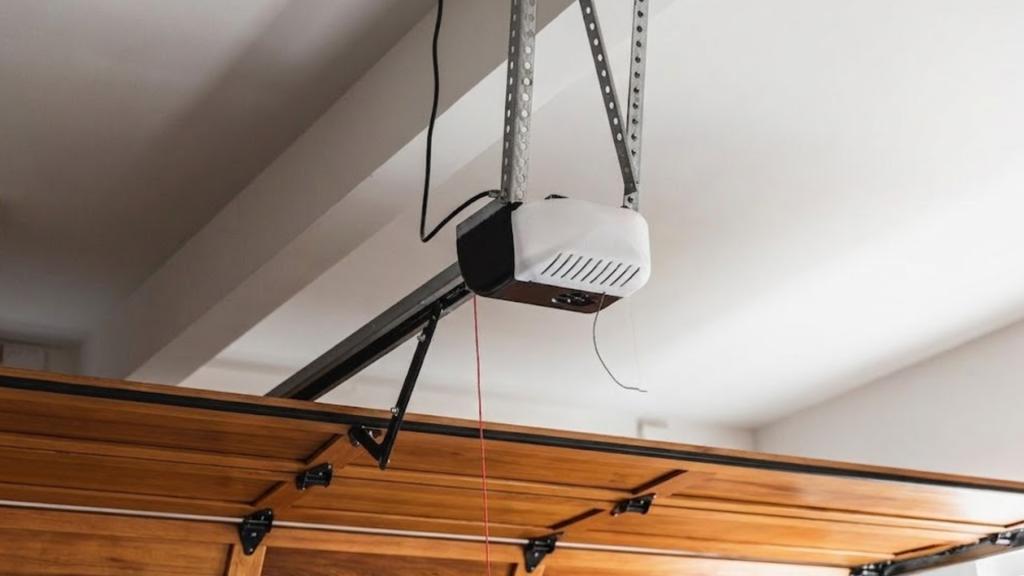
Routine care helps your opener work with less strain. Test the reversing feature, keep sensor lenses clean, and listen for new noises. You can lubricate metal rollers and hinges with garage-door-safe lubricant, but do not spray the opener motor or tracks with heavy grease.
Schedule a tune-up when the door begins to shake, drag, squeak loudly, or feel heavier than usual. Regular service can catch worn rollers, loose hardware, weak springs, and alignment issues before they become an emergency. It also protects the opener from lifting more weight than it was designed to handle.
For a deeper look at upkeep tips, see our related guide on garage door opener maintenance.
FAQs: Garage Door Opener Problems
Why did my garage door opener suddenly stop working?
The unit may have lost power, received a weak remote signal, detected a sensor issue, or developed a mechanical fault. Check the outlet, breaker, batteries, and sensor lights first. If the door is heavy or crooked, call a technician.
Why is my garage door opener humming but not opening the door?
The motor may be running while the trolley is disconnected, the gear is worn, or the door is too heavy to lift. A broken spring is a common reason a door becomes too heavy. Do not force the opener to keep running.
Can I open my garage door manually when the opener fails?
Yes, but only when the door is fully closed and appears stable. Pull the emergency release cord, then lift carefully. Stop if the door feels heavy, sticks, or moves unevenly. Never try this when the door is open and unstable.
Why does my garage door close halfway and then reverse?
The safety sensors may be blocked or misaligned. Clean both lenses, remove objects from the doorway, and check that the sensor lights are steady. If the issue continues, damaged wiring or another door problem may be involved.
How do I know if I need a new garage door opener?
Frequent breakdowns, grinding noises, failed safety features, and a motor that still struggles after the door has been serviced may point to replacement. An inspection can tell you whether repair or a new opener offers better value.
Get Reliable Help for Garage Door Opener Problems in Wisconsin
Garage door opener problems do not always mean you need a new unit. However, a door that is stuck, heavy, or unsafe should be checked quickly. Titan Garage Doors WI can inspect the opener, sensors, springs, tracks, and door balance to find the real cause and recommend the right solution.
Call Titan Garage Doors WI at (608) 960-7799 today for dependable service and a Free Estimate.