A loud garage door can make the whole house notice when someone leaves early or comes home late. Maybe it squeaks every morning, or maybe it rattles so much that you wonder if something is about to break. In many homes, the problem often starts with the garage door rollers. These small wheels help the door move along the tracks, but when they wear down, dry out, or collect dirt, the entire system can start to feel rough and noisy. That is why garage door roller maintenance matters, especially for homeowners in Stoughton, WI, where cold winters, summer heat, road dust, and daily use can all wear on moving parts.
Before diving into what to look for and how to care for them, it helps to understand what signs point to roller issues and what simple steps can keep your door running smoothly.
Why Is My Garage Door So Noisy?
A noisy garage door can happen for several reasons. Dry hinges, loose hardware, dirty tracks, opener strain, or worn garage door rollers can all create noise. Still, rollers are one of the first parts worth checking because they move every time the door opens and closes. When they stop rolling smoothly, the door may squeak, grind, shake, or drag through the tracks.
You may notice the noise more in the morning when the house is quiet. Or maybe it gets worse during colder months when parts feel stiff. Around Stoughton, homes near Downtown Stoughton, Lake Kegonsa, and nearby neighborhoods deal with real seasonal changes. Those temperature swings can make older rollers sound even worse.
Noise does not always mean disaster. However, it does mean your door needs attention.
Why Garage Door Roller Maintenance Matters
Good garage door roller maintenance practice protects more than the rollers. It also helps protect the tracks, opener, hinges, and other moving parts. When rollers move smoothly, the opener does not have to work as hard. The door also travels more evenly. That can reduce shaking, rattling, and daily wear.
Think about how often your garage door moves. Once in the morning and then again after school pickup. Maybe again after errands, yard work, or a late-night trip to the store. Over time, that movement adds up.
Regular garage door maintenance can help with:
- Quieter door operation
- Smoother opening and closing
- Less stress on the opener
- Fewer surprise repairs
- Longer roller life
- Better daily reliability
A little care can go a long way. However, you need to know what signs point to the rollers.
Signs Your Garage Door Rollers Need Attention
Your garage door usually gives you clues before a roller problem gets worse. You just need to slow down and listen.
Here are common signs your garage door rollers need attention:
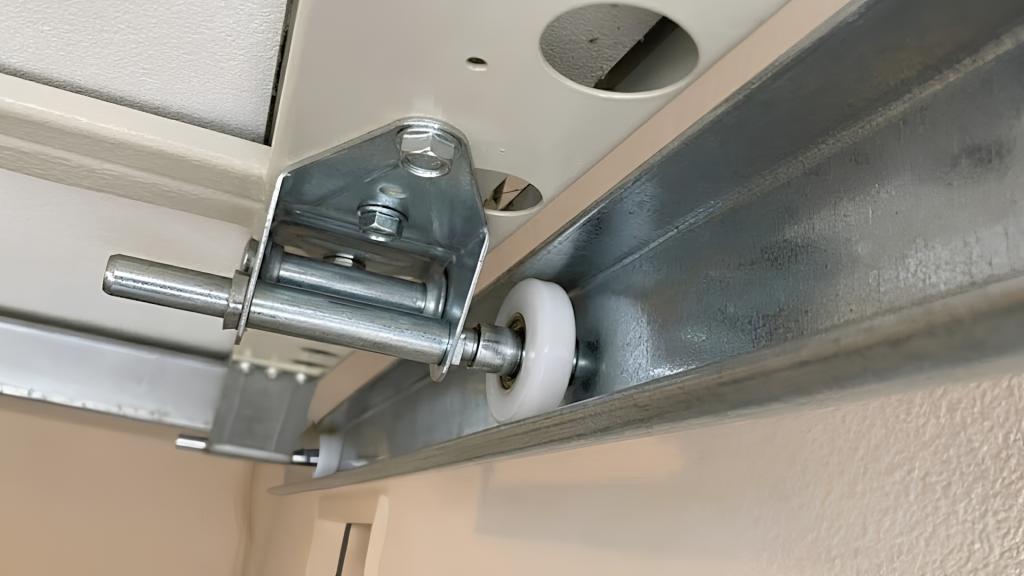
- The garage door squeaks along the tracks. A light squeak may mean the rollers need cleaning or lubrication. If the sound keeps coming back, the rollers may have wear.
- The door shakes while moving. A smooth door should not bounce, jerk, or wobble. Shaking can mean one or more rollers no longer move evenly.
- The garage rollers look cracked or worn. Older rollers can crack, chip, rust, or flatten in spots. Once that happens, they may not glide well inside the tracks.
- The door feels slow or strained. If the opener sounds like it is working harder than usual, the rollers may be adding resistance.
- You hear grinding or scraping. Grinding can mean the rollers are no longer spinning freely. It can also point to track or alignment issues.
- The rollers wobble inside the tracks. A roller should not look loose or unstable while the door moves. Wobbling rollers need professional attention.
If you notice several of these signs, don’t ignore them. The next step is a simple, safe homeowner inspection.
Garage Door Roller Maintenance Checklist for Homeowners
You do not need to take the garage door apart to spot early trouble. In fact, you should not. Garage doors carry a lot of weight, and some parts can be dangerous without the right tools.
Use this simple garage door roller maintenance checklist from the ground:
| What to Check | What to Look or Listen For | What It May Mean |
|---|---|---|
| Door sound | Squeaking, rattling, grinding | Dry or worn rollers |
| Door movement | Shaking, jerking, uneven travel | Roller or track issue |
| Roller condition | Cracks, rust, chips, wobbling | Possible roller wear |
| Tracks | Dirt, small debris, rubbing marks | Rollers may not glide smoothly |
| Bottom seal area | Dirt, salt, leaves, buildup | Debris may affect movement |
| Opener sound | Straining or slower movement | Door may have resistance |
After this quick check, wipe visible dirt from the tracks with a clean cloth. Do not use your fingers near moving parts. Also, do not loosen brackets, remove rollers, or adjust cables. If the door looks safe and only sounds dry, lubrication may help. Next, follow the proper lubrication steps to see if the noise improves.
How to Lubricate Garage Door Rollers the Right Way
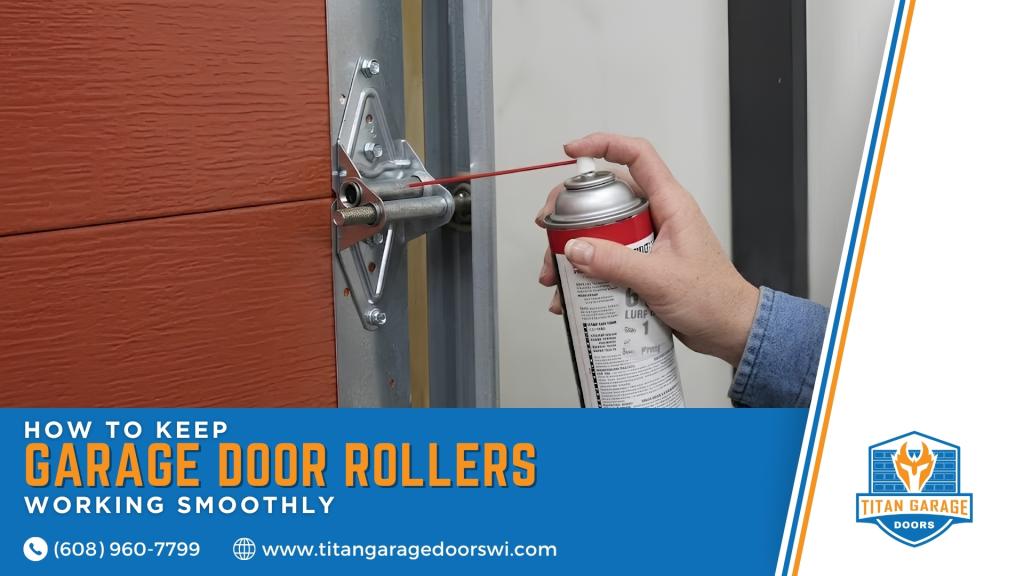
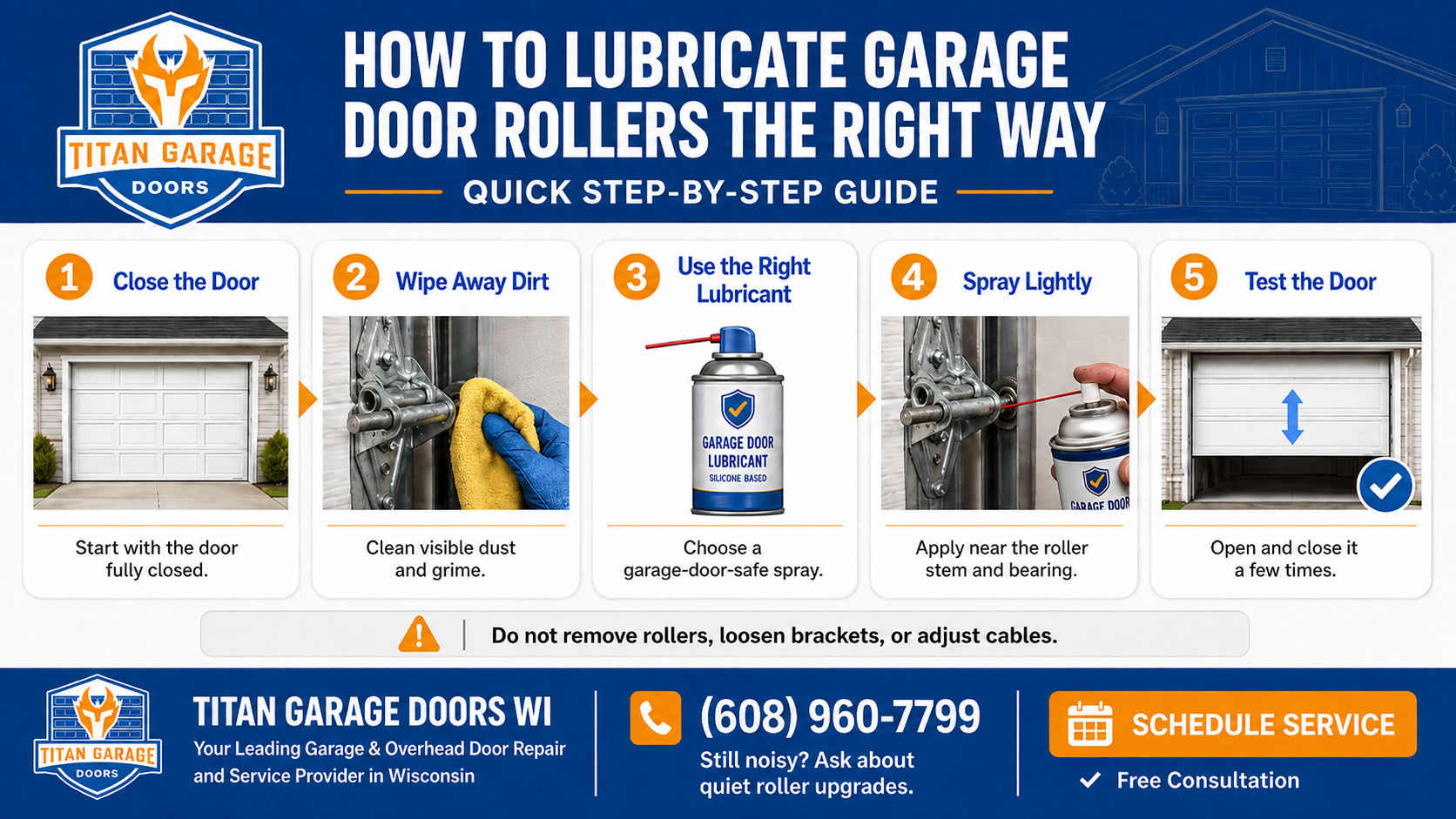
Lubricating garage door rollers can help reduce squeaking and support smoother movement, but it only works when you do it carefully. The goal is not to spray every part of the track but to clean the visible roller area, use the right product, and apply a light amount where the roller turns.
Many homeowners make the mistake of using thick grease or spraying too much lubricant into the track. That can attract dust, road grime, and debris, which may make the door noisy again. A silicone-based or garage-door-safe spray is usually the better choice for basic garage door roller maintenance.
Before you start, keep safety in mind. Do not remove rollers, loosen brackets, or adjust cables. Those parts can carry tension and should be handled by a trained technician. If the rollers look cracked, rusty, loose, or stuck, lubrication may not solve the problem.
Use the quick guide below as a safe homeowner reminder. If the door still squeaks, shakes, or feels rough after lubrication, it may be time to ask Titan Garage Doors WI about quiet roller upgrades or garage door roller replacement.
When Garage Door Roller Maintenance Is Not Enough
Sometimes, basic care will not solve the problem. If the rollers are damaged, worn out, or no longer spinning correctly, garage door roller replacement may make more sense.
Replacement may be the better choice when:
- The garage rollers stay noisy after lubrication. If lubrication only helps for a short time, the roller may have deeper wear.
- The rollers have cracks or rust. Cracked or rusty rollers cannot roll smoothly for long. They can also make the door feel rough.
- The garage door jerks during movement. Jerking can point to a roller that sticks or wobbles inside the track.
- The rollers no longer spin freely. A roller should turn as the door moves. If it drags instead, it needs attention.
- The door has become louder over time. A slow increase in noise can mean several rollers are wearing down at once.
Quiet roller upgrades can make a noticeable difference, especially for attached garages. If your garage sits near a bedroom, living room, or home office, smoother rollers can make daily use feel less disruptive. Titan Garage Doors WI can help you choose the right upgrade if you’re ready for a quieter, smoother door. Visit www.titangaragedoorswi.com to learn more.
FAQs: Garage Door Rollers
How long do garage door rollers usually last?
Garage door roller lifespan depends on material, door use, weather exposure, and maintenance. If your door gets daily use, the rollers may wear faster than rollers on a rarely used garage.
Should all garage door rollers be replaced at the same time?
Often, yes. If several rollers are old or worn, replacing the full set can help the door move more evenly and quietly.
Why is my garage door still noisy after lubrication?
The rollers may be worn, cracked, rusty, or loose. Noise can also come from hinges, tracks, springs, or the opener, so a full inspection may be needed.
Can worn rollers damage the garage door opener?
Yes. When rollers do not glide smoothly, the opener may work harder to move the door. Over time, that added strain can affect opener performance.
Are quiet roller upgrades worth it?
They can be worth it if your garage door sounds loud, shakes during movement, or sits near a bedroom, living room, or home office. A technician can explain which roller option fits your door.
Keep Your Garage Door Moving Smoothly
A noisy garage door may seem like a minor inconvenience, but it’s often an early warning sign of wear and tear. Since garage door rollers are used every time the door opens and closes, they naturally degrade over time and need regular attention to stay in good condition.
Start with the basics: pay attention to new or worsening sounds, inspect rollers for visible wear, keep the tracks clean, and apply the correct lubricant when needed. These simple steps can extend the life of your system and help prevent bigger issues down the road. However, if the door continues to shake, scrape, or operate unevenly, it may be time to consider garage door roller replacement.
In our next blog, we’ll break down How Much Garage Door Roller Replacement Costs, including what factors affect pricing, when replacement is more cost-effective than repair, and what homeowners in Wisconsin can expect when upgrading their rollers.
Ready for a Quieter Garage Door?
If your garage door is getting louder or harder to open smoothly, Titan Garage Doors WI is here to help. Our team provides professional garage door maintenance, roller replacement, and quiet roller upgrades designed to restore smooth, quiet operation.
Call (608) 960-7799 today to schedule a same-day garage door service and ask about quieter garage door roller options for your home in Stoughton, WI.