The good news? Most of these issues can be prevented with the right care. At Titan Garage Doors WI, we help Stoughton and nearby homeowners protect their doors before small problems turn into costly emergencies. So, what steps can you take to extend your garage door’s lifespan, and when is it time to call in a professional?
What Affects Your Garage Door Lifespan?
Several factors influence how long a garage door lasts. Material is important, but daily use, weather exposure, maintenance, and installation quality all play major roles.
- Frequency of use: A door that opens twice a day will naturally last longer than one that cycles ten times.
- Exposure to the elements: A sheltered garage door ages more slowly than one facing direct snow, rain, or harsh sunlight.
- Local climate: Wisconsin’s cold winters can stiffen old lubricants and strain worn parts, while moisture may cause rust on hinges, tracks, cables, or the door’s bottom edge.
- Home age and design: Older garages near downtown Stoughton may have aging hardware or non‑standard sizes, while newer homes often feature insulated garage doors that require different upkeep.
No matter where you live, paying attention to changes in movement, sound, or speed can help you spot issues early. Do you want to know how to extend your garage door lifespan? Start with simple habits that prevent wear and costly repairs.
Simple Ways to Extend Your Garage Door Lifespan
Small, consistent maintenance habits can significantly extend the your garage door lifespan. By staying ahead of wear and addressing minor issues early, you can avoid costly repairs and delay the need for a full replacement.
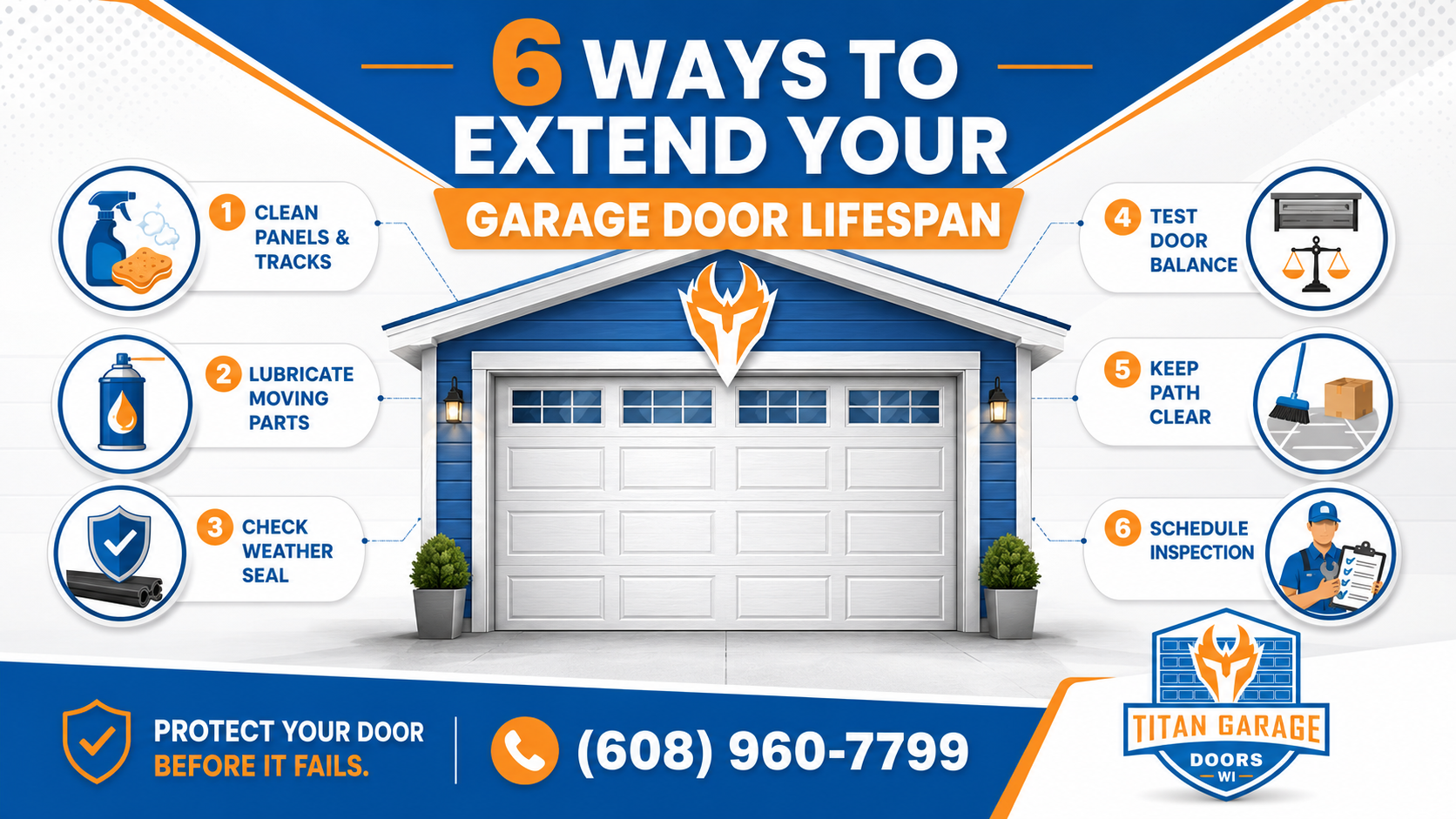
1. Clean the Door Before Dirt Causes Damage
Garage door cleaning may seem like a cosmetic task, but it also protects the door’s surface and moving parts. Dirt, road salt, leaves, and moisture can collect around the bottom seal, tracks, and panels. Start by washing the outside of the door with mild soap, warm water, and a soft cloth or sponge. However, avoid strong chemicals because they may damage the finish. Rinse the surface thoroughly and dry it with a clean towel.
Next, check the bottom edge of the door. During winter, road salt and slush can collect near the seal. If you leave that buildup in place, it may stain the door or encourage corrosion. You should also wipe dirt away from the tracks. However, do not apply thick grease inside them. Grease attracts dust and creates sticky buildup that can interfere with the rollers.
A quick garage door cleaning every few months can make the door look better and help you notice early rust, dents, cracks, or peeling paint.
2. Inspect the Garage Door Hardware Regularly
You do not need advanced tools to perform a basic visual inspection. Stand inside the garage with the door closed and look over the entire system. Do you see loose bolts? Are any rollers leaning or cracked? Do the cables look frayed? Does one side of the door sit lower than the other?
Pay close attention to changes instead of trying to diagnose every part yourself. A garage door uses heavy panels and tightly loaded springs. However, you should never loosen cables, brackets, or springs because they can release dangerous force. Instead, call an expert garage door technician when something looks damaged or out of place.
Early service usually gives the technician more repair options. Moreover, waiting until the door stops moving may lead to additional damage and higher garage replacement pricing.
3. Lubricate the Moving Parts
Proper lubrication reduces friction and helps the system move smoothly. Without it, metal parts can grind against each other and wear out faster. Use a garage-door-safe spray lubricant on hinges, metal rollers, bearings, and springs. Apply a small amount rather than soaking every part. Too much lubricant attracts dirt and creates a mess. After applying it, open and close the door several times. This movement helps spread the lubricant across the working surfaces.
Does the door still squeak after lubrication? The sound may come from a worn roller, loose hinge, or another problem that needs professional attention.
Avoid spraying lubricant on plastic rollers unless the manufacturer recommends it. You should also keep lubricant away from the opener belt, photo-eye sensors, and the surface where the wheels move through the tracks.
4. Test the Garage Door Balance
A balanced garage door should not feel extremely heavy or fall quickly when you move it manually. The springs carry much of the door’s weight, which allows the opener to guide the door instead of lifting the full load.
To check the balance, close the door and disconnect the opener using the emergency release cord. Then, lift the door slowly to about waist height. The door should stay close to that position. If it drops, shoots upward, or feels difficult to lift, the spring system may need adjustment or replacement.
However, do not try to adjust the springs yourself. Garage door springs hold strong tension, even when the door looks completely still. A trained technician has the tools and experience to work on them safely. Contact Titan Garage Doors WI for same-day garage door spring repairs in Stoughton, WI.
A balance problem also puts extra pressure on the opener. Fixing it early can protect both the door system and the motor.
5. Check the Weather Seal
The rubber seal along the bottom of the door helps block water, cold air, leaves, and small pests. Over time, it can crack, flatten, or pull away from the door. Inspect the seal after winter and before temperatures drop again. If you can see daylight underneath the closed door, the seal may no longer create a proper barrier.
Replacing a worn seal can help protect items stored in the garage. It can also improve comfort, especially when the garage connects directly to the house. Additionally, insulated garage doors provide better temperature control, but damaged seals can still allow cold air to enter around the edges. Good insulation and proper sealing work together.
6. Keep the Door Area Clear
A broom, bicycle, storage box, or children’s toy can block the door’s path. Even a small object can cause the door to close unevenly or reverse unexpectedly. Keep the floor clear near the tracks and photo-eye sensors. Clean dust and spiderwebs from the sensors with a soft cloth. Never move or bend them unless you know they have shifted out of alignment. You should also check the garage ceiling and opener rail. Hanging storage items should never touch the opener or interfere with the door’s movement.
This step sounds simple, but it prevents many avoidable problems. A clear path allows the door and safety system to work as designed.
7. Do Not Ignore New Sounds or Slow Movement
Your garage door does not need to operate silently. However, a sudden change in sound often signals a developing issue. Grinding may point to worn rollers. Meanwhile, a popping sound can come from stressed panels or hardware. Scraping may also indicate that a cable, track, or roller has shifted.
Likewise, a door that starts moving slowly may have weak springs, added friction, or opener trouble. Do not assume the motor causes every speed problem. The opener works with the entire door system, so one worn component can affect everything else.
Have you noticed that the door shakes near the top? Does it pause halfway? These changes deserve attention, even when the door still opens.
8. Schedule Professional Garage Door Maintenance
Homeowners can handle cleaning and basic visual checks, but a professional inspection covers areas that most people cannot safely evaluate.
During garage door maintenance, a technician can inspect the springs, cables, rollers, hinges, tracks, opener, safety sensors, and door balance. The technician can also identify loose hardware and uneven movement before they create a larger problem.
Professional service does not mean replacing every older part. A reliable technician should explain what needs immediate attention, what can wait, and what you should continue watching. At Titan Garage Doors WI, we believe homeowners deserve clear information before making a decision. We inspect the complete system instead of focusing on one noisy part.
When Should You Replace an Old Garage Door?
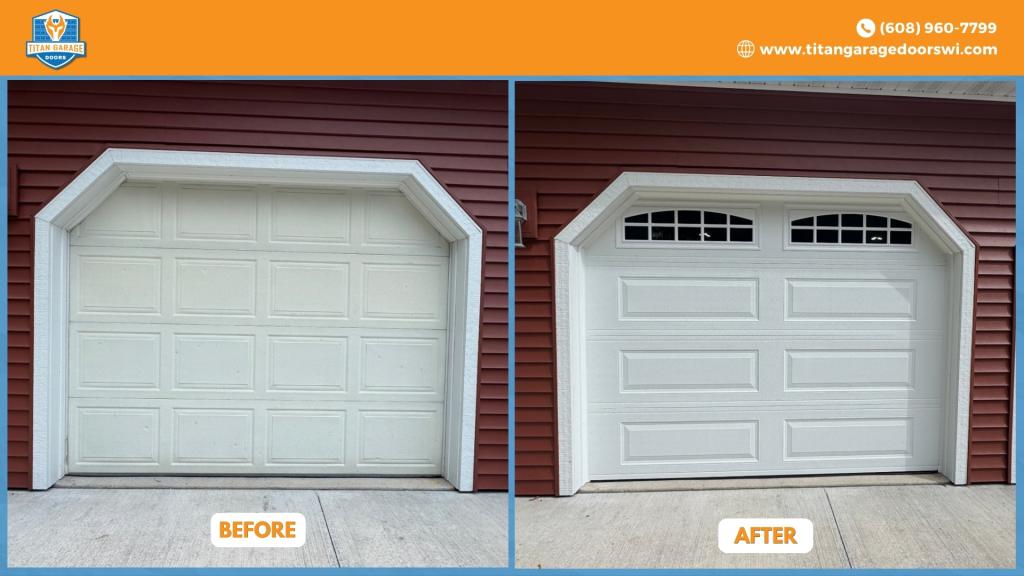
Knowing when to repair versus replace a garage door can save you both time and money. While regular maintenance can extend the garage door lifespan, there comes a point where continued repairs are no longer the most practical or cost-effective option.
To help you evaluate your situation more clearly, here is a simple breakdown of common warning signs and what they usually mean:
| Condition | What It Means | Recommended Action |
|---|---|---|
| Widespread rust or corrosion | The door’s structure is weakening and may no longer be safe or reliable | Consider full replacement |
| Multiple cracked or damaged panels | Structural integrity is compromised and repairs may only be temporary | Evaluate replacement options |
| Frequent breakdowns or repeated repairs | System components are wearing out across the board | Replacement may be more cost-effective |
| Poor insulation or energy loss | The door is outdated and not supporting indoor comfort | Upgrade to an insulated garage door |
| Visible warping or misalignment | The door may no longer seal or operate properly | Professional inspection required |
| Outdated appearance or curb appeal concerns | The door no longer matches the home’s style or value | Consider custom garage doors |
After reviewing these signs, it becomes easier to understand whether a repair will truly solve the problem or if a replacement is the smarter long-term investment.
Even so, it is always best to have a professional inspection before making a final decision. A trained technician can determine whether a targeted repair is enough or if the system is nearing the end of its service life. In some cases, replacing an unreliable door early can help you avoid unexpected failures, such as a stuck vehicle, a compromised garage, or an emergency service call.
For more information on what to expect when budgeting for a replacement, you can review our guide on new garage door cost.
Schedule an Inspection Before Your Garage Door Fails
Your garage door does not have to stop working before you ask for help. Titan Garage Doors WI provides professional garage door inspections, maintenance, repairs, and replacement services for homeowners in Stoughton and surrounding Wisconsin communities. We will inspect the complete system, explain what we find, and help you decide whether repair or replacement offers the best long-term value for your home.
Need a new garage door but worried about the upfront cost? Ask about our flexible financing options and monthly payment plans. Call Titan Garage Doors WI at (608) 960-7799 today to schedule your inspection and request a free estimate before a small issue becomes a costly emergency.