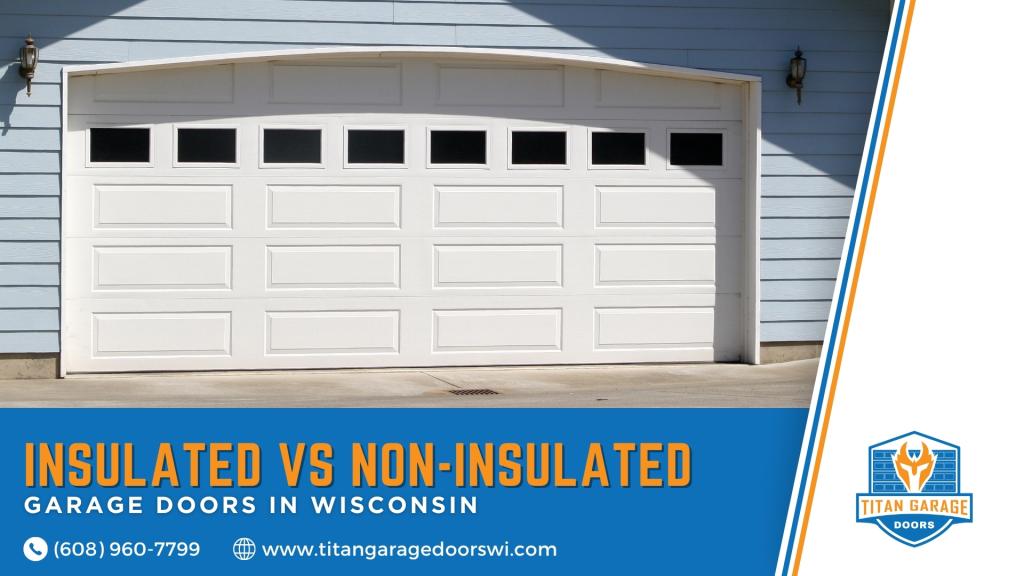
Wisconsin weather can make your garage feel completely different from one season to the next. In winter, the cold can creep in fast. In summer, the heat can build up until the garage feels uncomfortable, especially in the afternoon sun. That is why many homeowners compare insulated garage doors with non-insulated options before they invest in a garage door replacement. The right choice can affect comfort, noise, curb appeal, and how useful your garage feels every day.

Quick Answer: Which Garage Door Is Better?

Insulated garage doors are usually the better choice for attached garages, daily use, comfort, and noise control. They also make sense if you want a stronger door and better long-term value.

Meanwhile, a non-insulated garage doors can still work well for detached garages, basic storage, and homeowners who want the lowest upfront cost.

What Is the Difference Between Insulated and Non-Insulated Garage Doors?

The difference between an insulated garage door and a non-insulated one comes down to what is inside the door.

Most insulated garage doors use steel layers with insulation inside the panels. The insulation is usually polystyrene or polyurethane. Polystyrene is a rigid foam panel, while polyurethane is a foam that expands inside the door and bonds to the frame. Both materials help reduce heat transfer, and the added layers can make the door feel stronger and quieter during daily use.

On the other hand, non-insulated garage doors are more basic. Most have a single layer of steel or another material without insulation inside. They still open, close, protect the garage, and improve the look of the home. However, they do not help much with heat, cold, or outside noise.
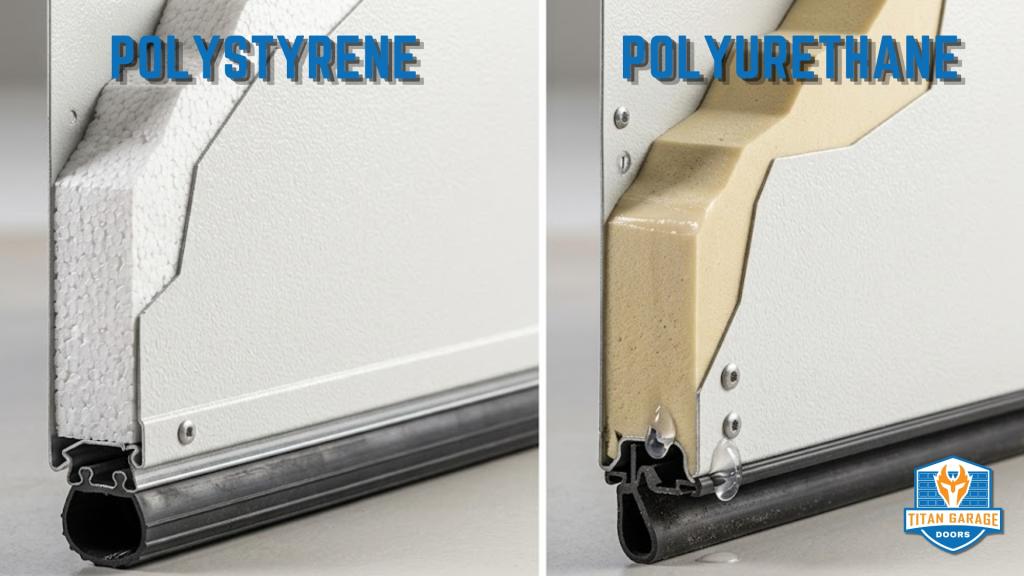
Polystyrene vs polyurethane insulated garage doors comparison showing side-by-side garage door insulation materials

So, the question is not “Which one is always better?” The better question is, “Which one fits the way I use my garage?”

Insulated Garage Doors vs Non-Insulated Doors: Quick Comparison

Before choosing a new garage door installation, it helps to see the main differences in one place.

Feature Insulated Garage Doors Non-Insulated Garage Doors
Best for Attached garages and daily use Detached garages and basic storage
Comfort Better in heat and cold More affected by weather
Noise Quieter operation Usually louder
Strength More solid feel Lighter build
Cost Higher upfront cost Lower upfront cost
Long-term value Better comfort and curb appeal Basic function at a lower price

This table gives you the big picture. Now let’s make the decision easier by looking at real homeowner situations.

When Insulated Garage Doors Are Worth It

Insulated garage doors are worth considering when the garage affects your comfort, storage, or daily routine. Here are the clearest signs they may be the better choice:

  • Your garage is attached to your home. If your garage connects to your house, heat and cold can affect nearby rooms. This matters even more if you have a bedroom above the garage, a mudroom beside it, or a kitchen entry through the garage.
  • You use the garage every day. If you park inside, walk through the garage often, store tools, or use the space as a small workshop, comfort becomes more important. Insulated garage doors can help make the space feel more stable through changing Wisconsin weather.
  • The garage gets too hot or too cold. If your garage feels uncomfortable in summer or winter, insulation can help slow down heat and cold transfer. It will not make the garage feel like a finished room, but it can make daily use more comfortable.
  • You want a quieter garage door. Insulated doors often feel quieter because the panels have more structure. If your current door rattles, shakes, or wakes people up during early mornings, an insulated option may help reduce that noise.
  • You want better long-term value. Insulated garage doors can improve comfort, curb appeal, and the overall feel of the garage. If you plan to stay in your home for years, the upgrade may be worth the higher upfront cost.

If most of these points sound familiar, an insulated door may be the stronger choice for your home. However, some garages do not need that extra upgrade, and that is where a non-insulated garage door may still make sense.

When a Non-Insulated Garage Door Is Enough

A non-insulated garage door can still be a smart choice in the right situation. Not every garage needs the extra upgrade. Here are the clearest signs a non-insulated door may be enough:

  • Your garage is detached from the house. If the garage does not connect to your living space, comfort may not matter as much. A basic door can still protect the space and keep the garage functional.
  • You only use the garage for storage. If the garage mainly holds lawn tools, holiday bins, outdoor equipment, or seasonal items, you may not need the added comfort of insulation.
  • You rarely use the garage. Some homeowners only open the garage a few times a week. If you do not spend much time inside, a non-insulated option may be practical.
  • Temperature and noise are not big concerns. If heat, cold, and door noise do not bother you, insulation may not be a must-have feature for your home.
  • You want a lower upfront cost. If you need a simple garage door replacement and want to stay within a tighter budget, a non-insulated door can still improve the look of your home and give you reliable access.
  • You do not plan to use the garage differently later. Before choosing, think ahead. Will you turn the garage into a workspace? Will you sell the home soon? If your needs will stay simple, a non-insulated garage door may be enough.

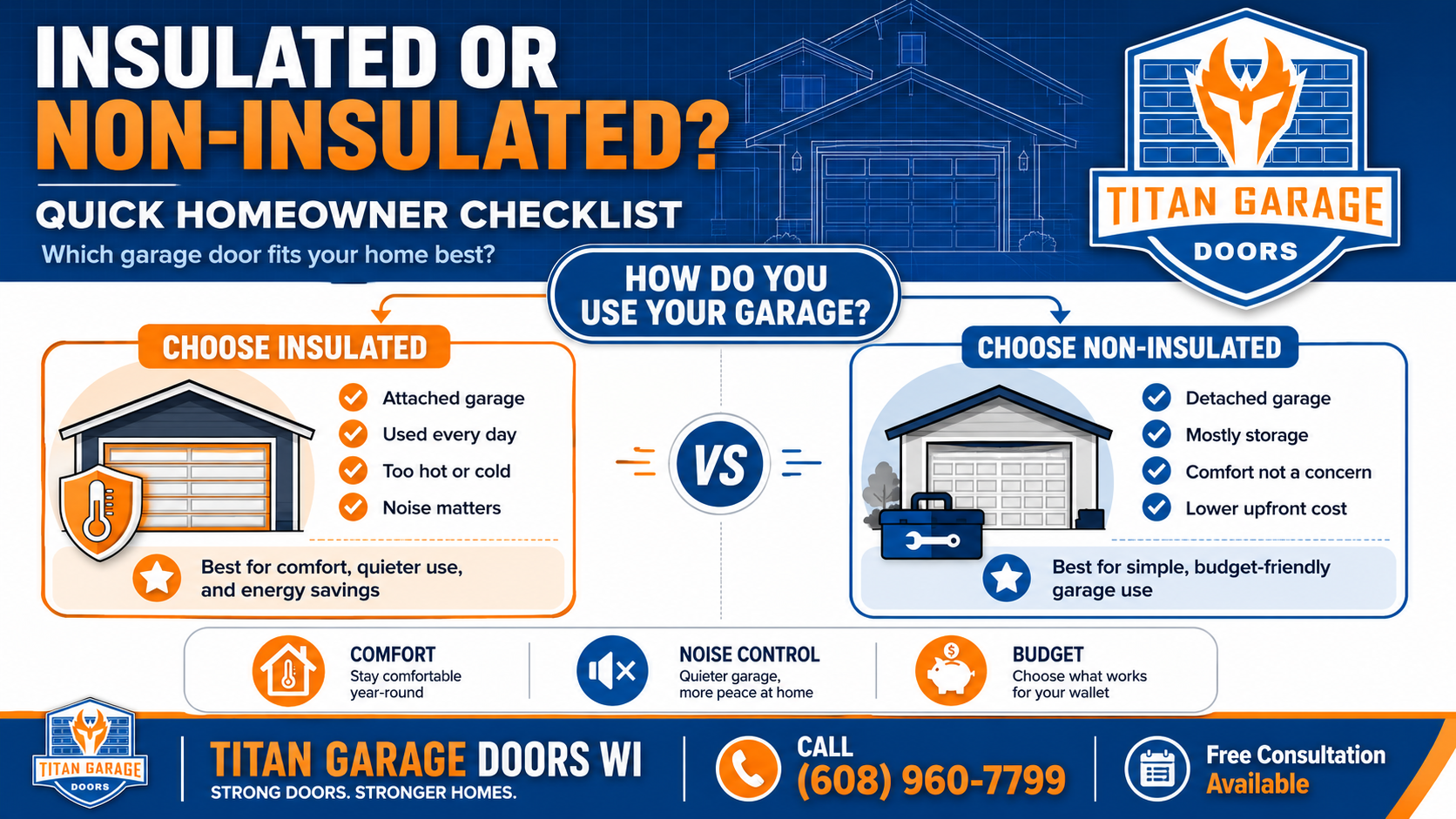
To make the choice easier, use the quick checklist below to compare both options side by side and see which garage door fits your home best.

Titan Garage Doors WI infographic comparing insulated and non-insulated garage doors for attached garages, daily use, temperature control, noise reduction, detached garages, storage use, and lower upfront cost

What to Check Before Replacing Your Current Garage Door

Before you choose between insulated and non-insulated doors, look closely at your current door. A quick check can tell you whether replacement makes sense.

Look for:

  • Dents or cracked panels
  • Rust near the bottom
  • Gaps around the sides or floor
  • Loud movement
  • Shaking or uneven travel
  • Worn weather seals
  • Repeat repair issues
  • An older opener that may need review

If your door has several of these problems, garage door replacement may be a better investment than another short-term repair. This is also the right time to compare insulation, door material, window styles, and opener compatibility.

However, do not adjust springs, cables, or heavy door parts yourself. Garage doors carry a lot of weight, and trained garage door installers should handle those parts safely. Always call for an expert garage door repair in Wisconsin.

Work With Local Garage Door Installers in Stoughton, WI

Choosing a garage door should not feel confusing. A good installer should explain the difference between insulated and non-insulated doors in plain language. You should understand what you are paying for and why it matters.

Titan Garage Doors WI helps Stoughton homeowners compare options based on their garage setup, budget, and comfort goals. Our team can walk you through steel garage doors, insulation levels, style choices, and energy-efficient upgrades. Instead of putting off the project, you can ask about our monthly payment options and choose a door that better fits your long-term needs.

Our local experience matters because Wisconsin homes deal with real temperature swings. Your garage door should fit that reality, not just look good in a brochure.

FAQs: Insulated Garage Doors

Can insulated garage doors help protect items stored in the garage?

Yes. They can help reduce extreme temperature swings, which may be helpful if you store paint, tools, sports gear, or seasonal items in the garage.

Do insulated garage doors look different from non-insulated doors?

Not always. Many insulated and non-insulated doors come in similar colors, panel styles, and window designs. The main difference is inside the door construction.

Are insulated steel garage doors a good choice for Wisconsin homes?

Yes. Insulated steel garage doors are a practical choice for many Wisconsin homes because they offer durability, comfort, low maintenance, and a clean exterior look.

Can I finance an insulated garage door upgrade?

Many homeowners use financing options to make energy-efficient upgrades easier to manage. Titan Garage Doors WI can explain available options during your free consultation.

Should I replace my garage door before selling my home?

It can be a smart move if the current door looks worn, dented, noisy, or outdated. A new garage door can improve curb appeal and help the home feel better maintained.

Conclusion: Choose the Door That Fits How You Use Your Garage

The best garage door is the one that matches your home, your routine, and how much comfort matters to you.

  • Choose insulated garage doors if you want better comfort, quieter use, stronger panels, and better long-term value.
  • Choose a non-insulated door if your garage is detached, used only for basic storage, or you need the lowest upfront cost.

If you are planning a summer upgrade, now is a good time to compare your options. Looking at insulation, material, style, and budget before installation can help you feel more confident about the door you choose.

Ready to Upgrade Your Garage Door?

Titan Garage Doors WI can help you compare insulated and non-insulated doors, explain energy-efficient upgrades, and discuss financing options that fit your project. Call (608) 960-7799 today to schedule your free consultation for garage door replacement or garage door installation.