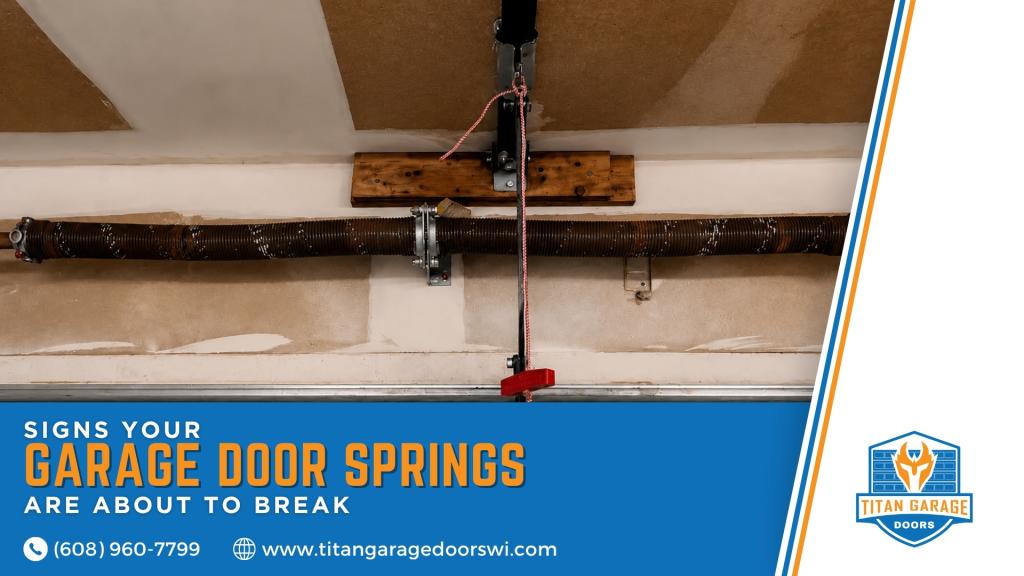
Imagine a freezing Wisconsin morning. You try to leave for work, and your garage door feels unusually heavy. The opener struggles, the door jerks or barely moves, and it’s clear something isn’t right. Many homeowners immediately blame the opener, but often the real issue is broken garage springs. These springs bear the full weight of the door, and extreme weather, heavy daily use, and lack of maintenance can drastically shorten their lifespan. Recognizing early warning signs and taking preventive action ensures your garage door stays safe, smooth, and reliable.
Quick Overview: Why Detecting Broken Garage Springs Matters
Broken garage springs are not just a nuisance—they are a safety hazard. A snapping spring can cause severe injury, damage vehicles, or even destroy door components. Wisconsin homeowners should pay attention to:
- Loud popping or grinding noises
- Door movement that feels uneven or unusually heavy
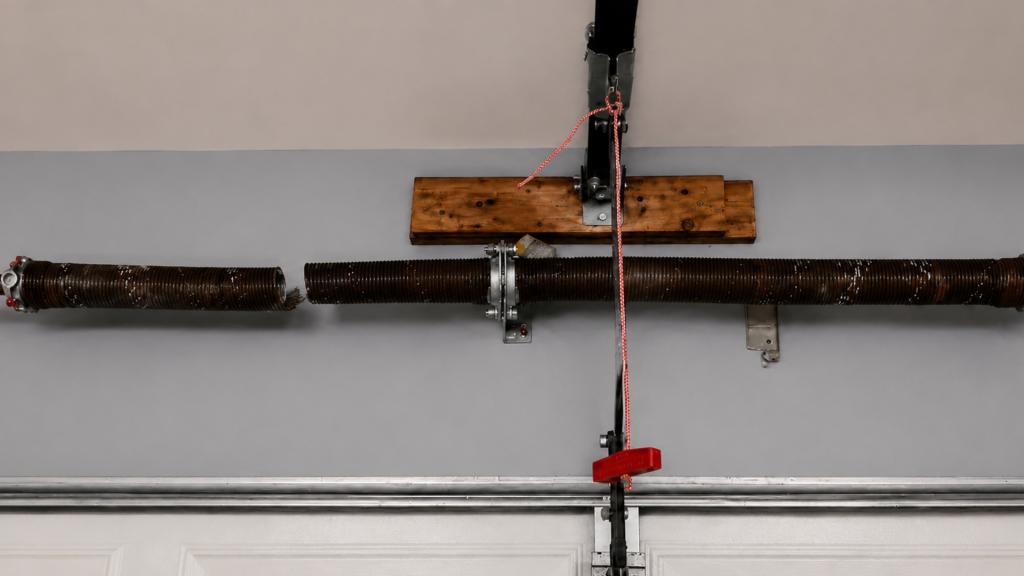
- Visible gaps, rust, or warped springs
Regular inspections, professional servicing, and timely replacement help prevent accidents and protect your garage door system.
Garage Spring Problems: Causes, Symptoms, and Typical Costs
Understanding the types of problems springs face helps homeowners anticipate repairs and avoid dangerous situations. This table below shows the most common issues, their causes, typical symptoms, and approximate repair costs.
| Problem | Cause | Symptoms | Typical Cost | Timeline |
|---|---|---|---|---|
| Door won’t open fully | Broken or weakened springs | Door opens partially or feels heavy | $150–$350 | 1–2 hours |
| Uneven or jerky movement | Uneven spring tension | Slams shut, moves unevenly | $200–$350 | 1–2 hours |
| Loud bangs or grinding | Spring snapping, misalignment | High-pitched or banging noises | $200–$400 | 1–2 hours |
| Visible gaps or rust | Material fatigue, corrosion | 1–2 inch coil gaps, surface rust | $150–$350 | 1–2 hours |
| Excessive opener strain | Overworked springs | Humming motor, slow response | $200–$400 | 1–2 hours |
How to Inspect Broken Garage Springs
Regular inspection of garage springs can prevent sudden failures and keep your door safe. Homeowners should conduct visual checks and manual tests to detect wear, rust, or gaps before they become a hazard.
Visual Inspection
Check both torsion and extension springs for visible gaps, rust, or bending. Inspect brackets, cables, and rollers for corrosion. A careful visual assessment is the first step to catching broken garage springs before they fail completely.
Manual Operation Test
Manually lifting and lowering the door without the opener can reveal uneven movement, heavy spots, or sluggish operation. This test helps homeowners identify springs that may need professional attention.
Listening for Noise
Squeaks, pops, or grinding often indicate that the springs are weakening. Ignoring these sounds can lead to total spring failure, causing damage and safety hazards.
A study in Ophthalmic Surgery, Lasers & Imaging Retina reported multiple injuries from DIY spring repairs, some leading to permanent vision loss (PMC12087354). Professional inspections are safer and protect homeowners from serious injury.
Signs Indicating Garage Door Springs Are About to Break
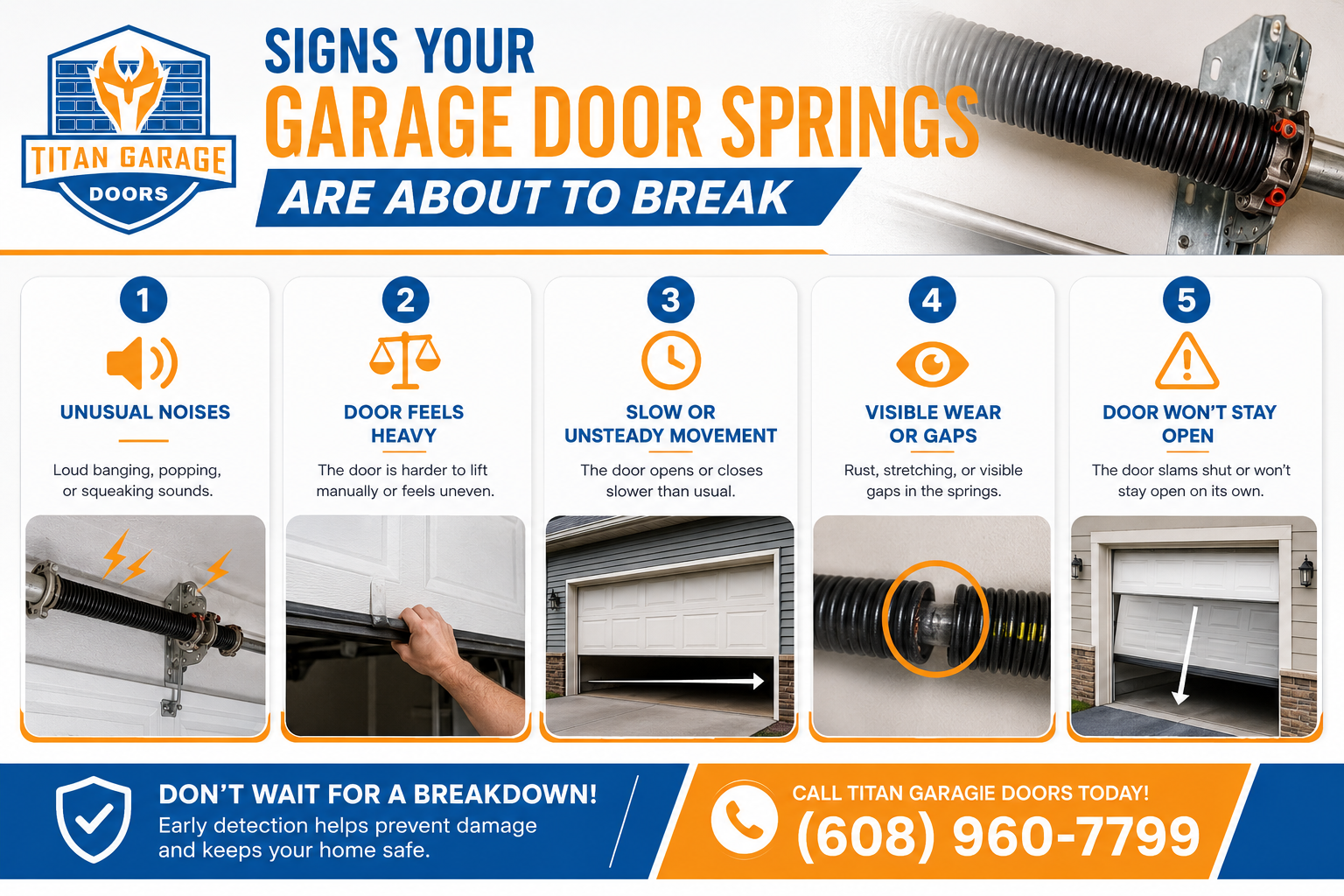
Early recognition of spring problems allows homeowners to prevent accidents and costly repairs. Here are the key indicators that your springs may be nearing failure:
Garage Door Won’t Open Fully Due to Broken Garage Springs
A door that does not fully open signals a loss of spring tension. Homeowners should check if the door reaches its normal height and whether the movement differs from usual operation. Ignoring this symptom could lead to the door sticking or falling.
Awkward Garage Opening and Closing
Irregular movement during operation indicates weakening springs. If the door slams or moves unevenly, one or more springs may have lost tension, potentially causing accidents or further mechanical issues.
Strange Garage Door Sounds
Unusual sounds like squeaks, popping, or grinding often indicate internal spring wear. Listening carefully helps homeowners identify potential spring issues before failure.
Large Gaps in Garage Door Springs
Visual inspection may reveal gaps between coils of 1–2 inches. Significant gaps indicate the spring is damaged and likely needs immediate replacement.
Rust or Warping
Rust or warping shows material fatigue that compromises spring strength. Environmental factors in Wisconsin, moisture, and road salt accelerate corrosion, reducing broken garage springs lifespan.
Common Causes of Broken Garage Springs
Springs typically fail due to a combination of material fatigue, environmental stress, and usage patterns:
- Material Fatigue: Every garage door spring is rated for a certain number of cycles (one cycle = one full open and close). Over time, repeated use causes metal fatigue, gradually weakening the spring until it breaks. Heavy daily use, such as using the garage as the primary household entrance, accelerates this process.
- Corrosion and Rust: Moisture, humidity, and road salt—common in Wisconsin—lead to rust and corrosion on springs, cables, and brackets. Rust compromises the spring’s flexibility and strength, increasing the likelihood of breakage. Regular lubrication and environmental protection are critical to slow corrosion.
- Temperature Fluctuations: Extreme cold causes metal to contract and become brittle, while heat can cause expansion. Seasonal freeze-thaw cycles create additional stress, making older or weakened springs more prone to snapping.
- Neglect and Improper Maintenance: Lack of routine inspections, lubrication, or cleaning allows wear and corrosion to go unnoticed. Springs that are not properly maintained wear faster and can fail unexpectedly. Homeowners should schedule seasonal maintenance and consider professional inspections to reduce this risk.
- Mechanical Overload: Issues like door misalignment, unbalanced loads, or forcing a stuck door can place extra strain on springs. Over time, this overload weakens the spring and shortens its lifespan.
By understanding these causes, homeowners can take proactive measures, such as lubrication, routine inspections, and professional servicing, to prevent premature spring failure. For a detailed guide on minimizing wear before peak use seasons, see How to Prevent Garage Door Spring Problems Before Summer.
Step-by-Step Repair Guide for Broken Garage Springs
Repairing broken garage springs requires care and expertise, as improper handling can be dangerous. This section provides a structured guide for homeowners to understand the process and the role of professionals:
1. Prioritize Safety
Before any inspection or repair, ensure the garage door is fully closed and unplugged.
- Springs are under high tension and can cause serious injury.
- Keep children, pets, and obstacles away from the work area.
- Never attempt to adjust or remove springs on your own.
2. Assess the Extent of Damage
A careful assessment identifies which springs are failing and if immediate replacement is necessary.
- Look for visible gaps between coils, rust, or bending.
- Check both torsion and extension springs to understand the system’s overall condition.
- Test the door manually with power disconnected to detect unusual heaviness or uneven movement.
3. Determine Repair or Replacement Needs
Not all spring issues require full replacement, but severe damage warrants professional intervention.
- Minor wear may be addressed with professional lubrication and tension adjustment.
- Springs showing cracks, large gaps, or extreme rust should be replaced to prevent accidents.
- Professionals can match the correct spring type and tension to your door’s weight.
4. Professional Garage Door Spring Replacement Process
Certified technicians ensure safety and long-term reliability.
- Use specialized tools to safely remove old springs and install new ones.
- Verify correct tension and alignment to balance the door properly.
- Test the door for smooth operation both manually and with the opener.
5. Confirm Functionality and Safety
After repair or replacement, ensure everything works as expected.
- Door should open and close smoothly without unusual noises.
- Springs, cables, and rollers should move evenly.
- Any irregularities should be addressed immediately by the technician.
6. Establish a Garage Spring Maintenance Routine
Regular maintenance reduces wear and extends spring life.
- Schedule inspections at least twice a year, ideally before and after winter.
- Lubricate springs, cables, and hinges to reduce friction and prevent corrosion.
- Monitor door performance and schedule professional service at the first sign of trouble.
For related cost information and planning, see How Much Does Garage Door Spring Repair Cost in Wisconsin?.
FAQs: Broken Garage Springs
What factors can affect the cost of repairing broken garage springs?
Repair costs vary depending on spring type (torsion vs. extension), labor rates, parts quality, and whether additional components like cables or brackets need replacement. Homeowners can request a detailed estimate to plan for expenses.
Can broken garage springs affect the garage door opener?
Yes. Worn or broken springs increase the load on the opener, which can lead to premature motor wear or overheating. Addressing spring issues promptly protects both the door and the opener.
Are there different types of springs that last longer than others?
Torsion springs generally last longer than extension springs due to their design and load distribution. Stainless steel or coated springs are more resistant to corrosion and weather-related wear.
How does moving heavy items in and out of the garage impact springs?
Frequent heavy usage or sudden loads can accelerate spring fatigue. Doors used as primary entryways experience more cycles, which can reduce the overall broken garage springs lifespan.
What seasonal precautions can protect my garage springs beyond basic maintenance?
Homeowners can install weather stripping, clear snow and ice promptly, and maintain a dry garage floor to reduce moisture exposure. These steps prevent rust and prolong spring life without requiring spring tension adjustments.
Conclusion
Broken garage springs are a serious safety concern. Recognizing warning signs, scheduling regular inspections, and hiring professionals ensures doors operate safely. Timely care also prevents damage to the opener, tracks, cables, and rollers. Homeowners who stay vigilant can avoid costly failures.
Book a Garage Door Spring Inspection in Wisconsin Today
If your garage door feels heavy, noisy, or uneven, call Titan Garage Doors WI for professional garage door spring repair and replacement. We offer free estimates, use high-quality parts, and provide same-day garage door service in Stoughton, WI, and nearby areas. Flexible monthly payment plans make professional maintenance safe and affordable. Call 608-960-7799 today.