When summer arrives, the last thing any homeowner wants is a garage door stuck halfway, loud creaks, or a spring snapping at the wrong time. Garage door springs carry the full weight of your door, and a single failure can disrupt your day, damage property, or even cause injury. Preparing your garage door now with proper garage door spring maintenance ensures smooth operation, safety, and peace of mind all season long.
Quick Overview
Regular garage door spring maintenance keeps torsion and extension springs in peak condition. By inspecting, lubricating, and adjusting them before summer, homeowners can prevent common failures, costly repairs, and safety hazards. This guide covers types of springs, summer effects, maintenance steps, warning signs, professional help, and FAQs.
Common Garage Door Spring Problems at a Glance
Before performing maintenance, it’s important to understand the problems that commonly occur. Identifying these early can save time, money, and prevent accidents.
| Problem | Cause | Solution | Cost | Timeline |
|---|---|---|---|---|
| Noisy Operation | Worn or dry springs | Lubricate springs, check tension | $0–$20 for DIY; $200–$400 pro | 15–30 mins |
| Uneven Lifting | One spring weaker or unbalanced | Adjust tension or replace spring | $200–$400 | 1–2 hrs |
| Fraying or Rust | Lack of lubrication, humidity | Clean, lubricate, or replace spring | $0–$20 for DIY; $200–$400 pro | 15–60 mins |
| Broken Spring | Age, frequent use, poor maintenance | Replace spring with pro service | $200–$400 | 1–2 hrs |
| Door Doesn’t Stay Up | Weak or broken springs | Inspect, adjust, or replace | $200–$400 | 1–2 hrs |
Understanding Your Garage Door Springs
Knowing the types of springs in your garage helps you apply the right garage door spring maintenance techniques. Each type has unique characteristics that affect operation and longevity.
What Are Torsion and Extension Springs?
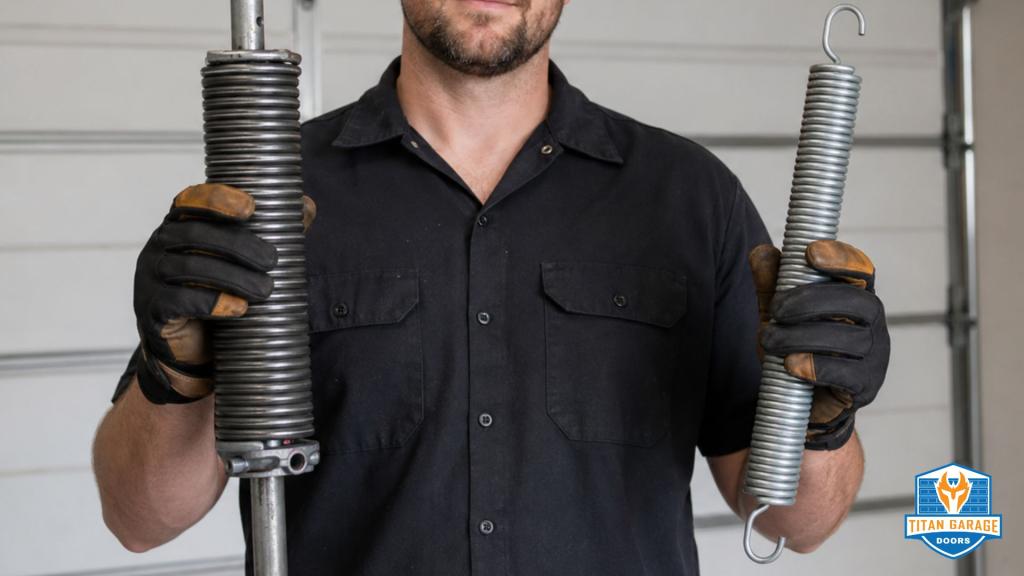
Garage doors use two main spring types: torsion springs and extension springs. Torsion springs twist to lift the door smoothly, while extension springs stretch along the door sides. Understanding these differences helps homeowners detect issues and perform targeted maintenance. Proper care ensures safety and smooth door operation.
Typical Lifespan of Garage Door Springs
Torsion springs: 10,000–15,000 cycles
Extension springs: 5,000–10,000 cycles
Regular maintenance can extend lifespan. Knowing how long springs usually last helps schedule inspections before failures occur, saving homeowners from unexpected repairs.
How Summer Weather Impacts Garage Door Springs
Seasonal changes can stress your springs. Hot temperatures and humidity increase wear and reduce efficiency if proper maintenance isn’t performed.
Temperature and Metal Expansion
Heat causes metal in springs to expand, affecting tension. This expansion may make doors harder to lift and accelerate wear. Performing garage door spring maintenance before summer avoids sudden malfunctions and costly repairs.
Humidity and Rust
High humidity in Stoughton, WI, can corrode garage door springs, especially if they’re not lubricated. Rusted springs are noisier, less efficient, and prone to breakage. Maintaining springs now protects them from seasonal damage and prolongs performance.
Step-by-Step Garage Door Spring Maintenance Before Summer
Proactive maintenance ensures your garage door stays safe and functional. Following these steps prevents costly repairs and keeps doors operating smoothly.
Tools and Safety Gear You’ll Need
- Ladder
- Wrenches
- Silicone-based lubricant
- Protective gloves and safety glasses
Safety first: Never adjust torsion springs yourself if unsure—they are under extreme tension and can cause serious injury. Garage door spring maintenance is safest with the right tools and precautions.
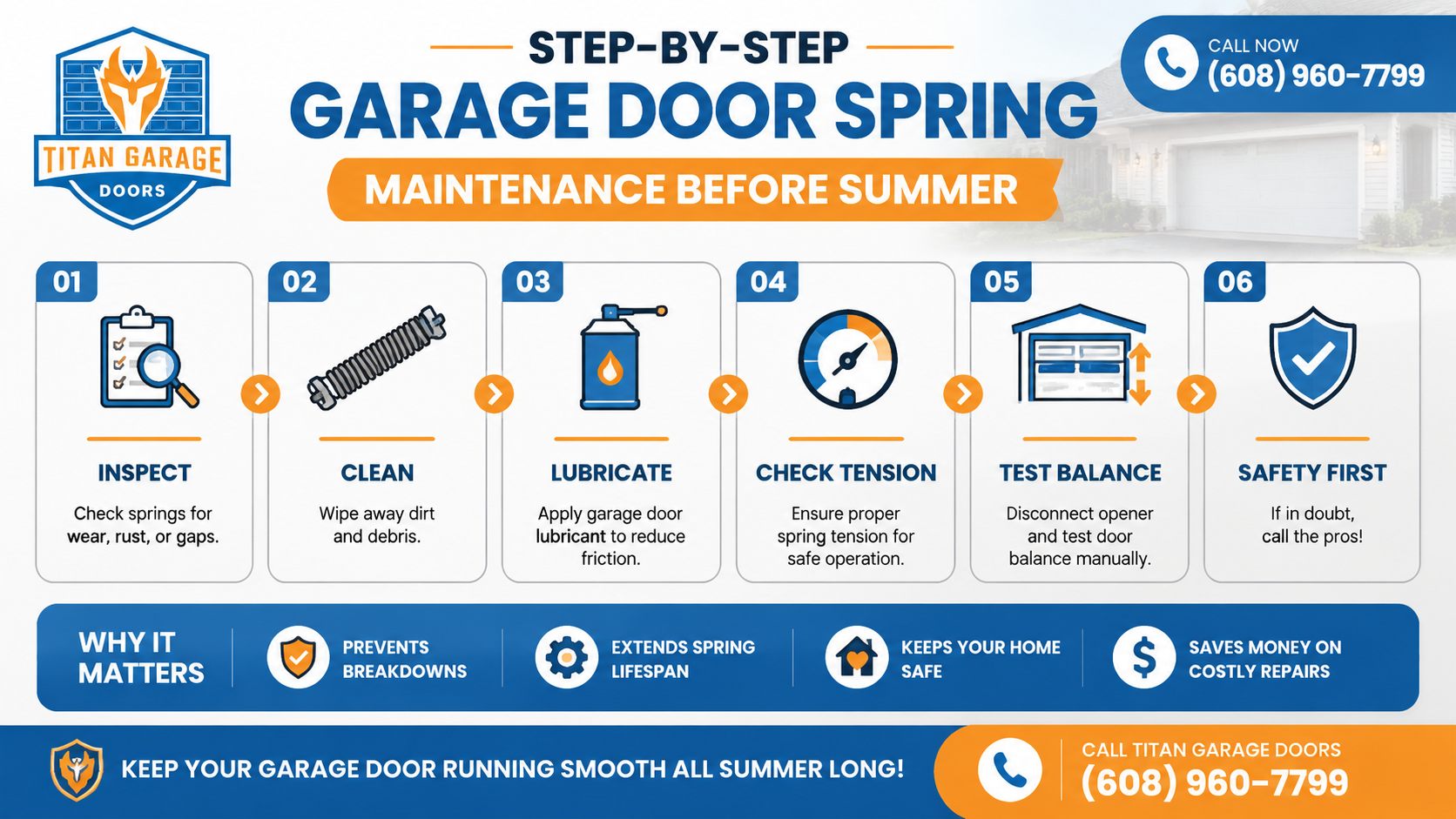
- Inspect Springs Carefully: Look for fraying, rust, or gaps in torsion coils. Early detection prevents sudden failures and identifies minor issues before they escalate.
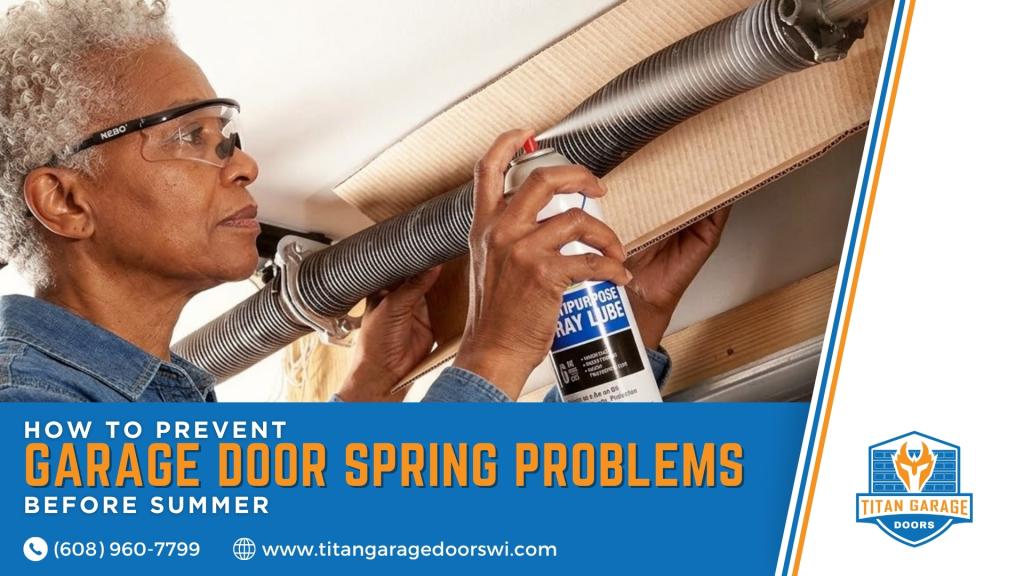
- Lubricate Springs Properly: Use a silicone-based garage door lubricant. Apply sparingly to avoid attracting dirt while ensuring smooth movement and rust protection.
- Check Tension and Balance: Close the door and lift manually. The door should move evenly. Imbalances indicate the need for professional adjustment, keeping your garage safe.
Warning Signs Your Springs Need Attention
Early detection of issues saves time, money, and stress. Regular garage door inspections reveal hidden spring problems before they become emergencies.
- Loud squeaking, grinding, or snapping noises
- Door moves unevenly or hesitates
- Visible rust or fraying strands
- Springs no longer return to neutral position
- Door suddenly drops or feels heavier
Even if springs appear fine, seasonal garage door maintenance ensures your garage door stays functional during high-use summer months.
When to Call Professional Garage Door Technicians
Some spring issues require trained professionals. Attempting complex repairs without experience can be dangerous.
- Broken or severely rusted springs
- Torsion spring tension adjustments
- Multiple signs of wear or imbalance
Professional inspections prevent accidents, reduce repair costs, and ensure correct garage door spring installation. In Wisconsin, garage door spring replacement typically ranges $200–$400 depending on spring type and installation.
Garage Door Spring Safety Tips
Maintenance should never compromise safety. Follow these best practices when inspecting or servicing springs:
- Never adjust springs without proper knowledge.
- Keep children and pets away during maintenance.
- Wear gloves and eye protection.
- Ensure the garage door is fully closed before starting.
- Call professionals if unsure—it’s safer and cost-effective.
FAQs About Garage Door Spring Maintenance
Can extreme cold affect my garage door springs even after summer maintenance?
Yes, low temperatures can make metal springs contract and become brittle. Winter inspections are recommended to ensure springs stay balanced and functional.
What type of lubricant is safest for garage door springs in high-humidity areas?
Silicone-based or lithium-based lubricants resist moisture and dust, keeping springs operating smoothly.
How do I know if my garage door springs are compatible with my new garage door opener?
Spring strength and type must match the door weight and opener specifications. A professional can verify compatibility.
Can regular use of the garage door alone maintain spring health?
No. Daily operation helps, but springs can still wear unevenly or rust without proper garage door spring maintenance.
Are there warning signs in the garage door hardware that suggest springs might fail soon?
Yes. Bent tracks, loose brackets, sagging cables, or doors that drift slightly when stopped can indicate spring stress.
Conclusion
Proper garage door spring maintenance protects your family, garage, and door investment. Performing seasonal maintenance now ensures safe, smooth operation and avoids costly repairs later. Taking proactive steps keeps your garage door functioning reliably through heavy summer use.
Ensure Your Garage Door Is Ready for Summer
Ensure your garage door is ready for summer with professional inspection and maintenance. Our certified technicians provide expert garage door repair and maintenance in Wisconsin. Call 608-960-7799 today and ask about our convenient payment plans for hassle-free service. Schedule your free estimate now and keep your garage door safe and reliable.