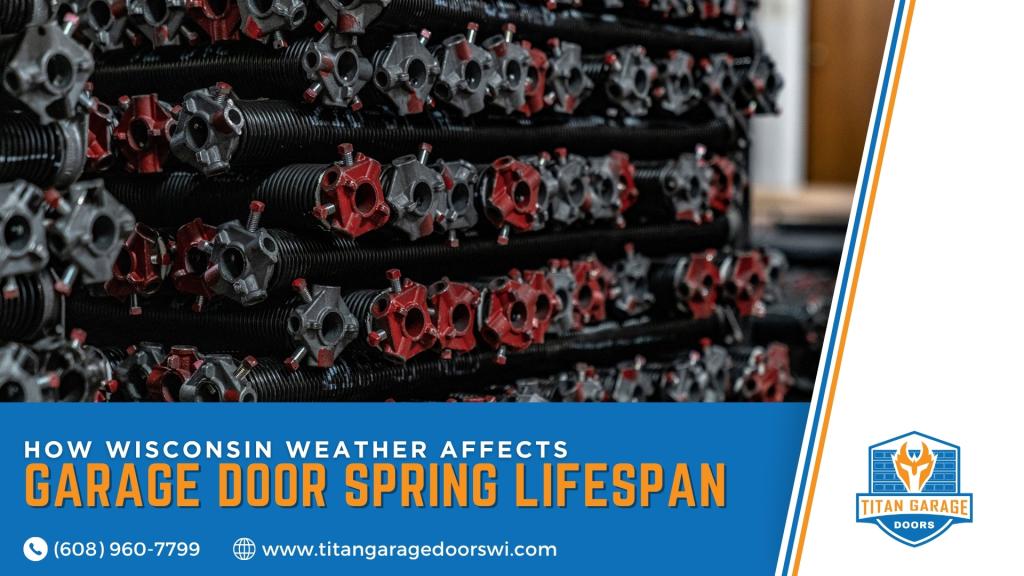
A garage door problem never feels small when your car is trapped inside on a freezing Wisconsin morning. You press the opener, hear the motor strain, and the door only moves a few inches. Many homeowners blame the opener first. However, the real issue is often the spring. In Wisconsin, garage door spring lifespan can be affected by winter cold, spring rain, summer humidity, fall temperature drops, and road salt carried in from snowy roads. Over time, these conditions wear down the metal and increase the chance of a sudden spring failure.
That is why spring care matters before the door stops working. A weak spring can make your opener work harder, throw the door off balance, and create a safety risk for your home. The good news is simple. When you understand how each season affects your garage door spring, you can spot warning signs earlier and avoid a stressful breakdown.
Short Summary
Wisconsin weather can shorten garage door spring lifespan because cold temperatures, moisture, road salt, humidity, and seasonal temperature swings weaken metal over time. Homeowners can help prevent spring failure with regular inspections, proper lubrication, rust checks, and timely spring replacement.
Garage Door Spring Lifespan by Season
| Season / Weather Issue | How It Affects the Spring | Warning Sign | Best Solution | Timeline / Cost Note |
|---|---|---|---|---|
| Winter cold | Makes older springs less flexible and more stressed | Door opens only a few inches | Schedule an inspection before deep winter | Service may be urgent if the door is stuck |
| Snow, ice, and road salt | Speeds up rust and corrosion | Rust on springs or nearby hardware | Use proper lubricant and check for rust | Best checked during and after winter |
| Spring rain | Adds moisture around metal parts | Squeaking or rough movement | Schedule a post-winter tune-up | Early spring is a smart time |
| Summer humidity | Keeps metal parts damp | Noisy or uneven door movement | Lubricate and inspect moving parts | Summer maintenance helps before fall |
| Fall temperature drops | Exposes weak springs before winter | Door feels heavier than usual | Book a pre-winter inspection | Best before freezing weather returns |
| Year-round weather swings | Expands and contracts metal repeatedly | Jerky movement or spring fatigue | Seasonal maintenance | Depends on usage and spring age |
Why Garage Door Spring Lifespan Matters in Wisconsin
Garage door springs do the heavy lifting. Your opener helps move the door, but the spring supports the door’s weight. When the spring weakens, the opener has to work much harder.
That can lead to bigger problems, such as:
- A door that opens unevenly
- A door that feels too heavy
- A loud bang when the spring snaps
- Extra strain on the opener
- A garage door that will not open at all
Most springs are rated by cycles. One cycle means the door opens and closes once. However, weather also matters. In Wisconsin, cold mornings, wet garages, road salt, and humidity can all reduce the useful life of the spring. So, even if your door does not look damaged, the spring may still be wearing down behind the scenes.
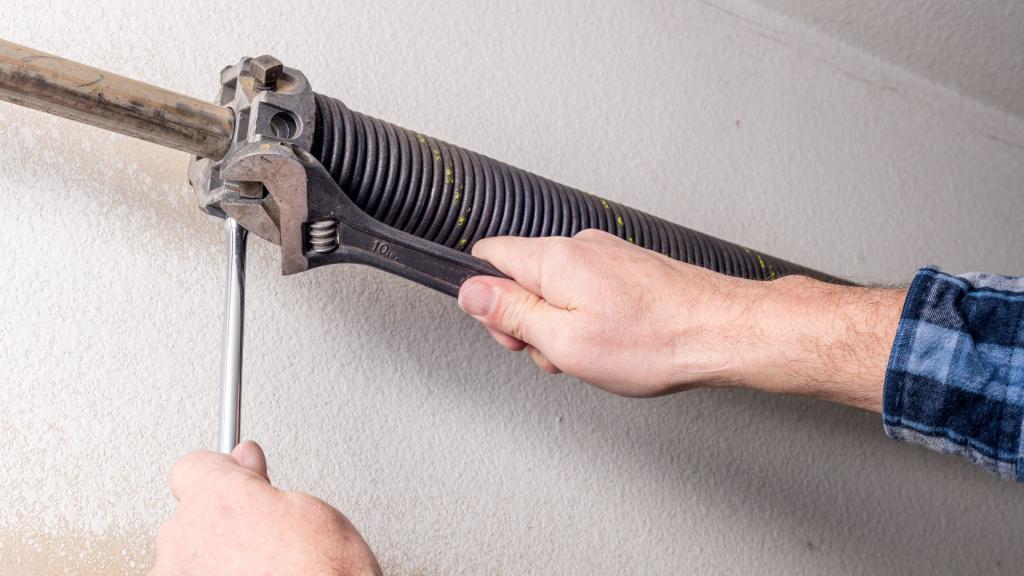
Winter Weather and Garage Door Spring Lifespan
Winter is often the hardest season on garage door springs in Wisconsin. Cold weather can make old metal springs less flexible. When the spring is already worn, freezing temperatures can push it closer to failure.
Other winter problems can add stress too. For example, the weather seal may freeze to the ground. Tracks can collect ice. Rollers may become stiff. Lubricant can also thicken in low temperatures. When that happens, the door needs more force to move.
That extra force puts pressure on the spring every time the door opens and closes. This is why many homeowners notice spring problems during cold mornings. If the opener sounds strained or the door only opens a few inches, stop using it and call a professional.
Spring Moisture, Road Salt, and Rust Problems
Spring may feel like a relief after winter, but it can still be rough on your garage door system. Melting snow, rain, and damp concrete can keep the garage humid. If your car brings in slush and road salt during late winter, that moisture can sit around the door area for weeks.
Road salt is especially hard on metal parts. It can speed up corrosion on springs, cables, hinges, and brackets. Once rust starts forming on a spring, the surface becomes rougher. That adds friction and weakens the metal over time.
This is also the right season to read more about Garage Door Spring Maintenance Tips for Wisconsin Homes. A post-winter inspection can catch rust early, before it turns into a broken spring or an emergency repair.
Summer Humidity, Fall Drops, and Temperature Swings
Summer may not seem dangerous for garage door springs, but humidity can still cause problems. Warm, damp air can encourage rust, especially if the spring already has small surface wear from winter. Heat can also cause metal to expand slightly.
Then fall arrives, and temperatures start dropping again. A spring that felt fine during summer may begin showing signs of weakness as colder weather returns. This is why fall is one of the best times to schedule a garage door tune-up.
Wisconsin weather can change fast. One week may feel warm and damp. The next week may bring cold mornings and frost. These repeated shifts cause metal to expand and contract. Over time, that stress can shorten garage door spring lifespan, especially when the door is used several times a day.
Signs Wisconsin Weather Is Shortening Garage Door Spring Lifespan
A failing spring usually gives warning signs before it breaks. The key is knowing what to watch for.
Call a professional if you notice:
- The door feels heavy when lifted manually
- The opener sounds louder than normal
- The door opens only a few inches
- The door moves unevenly
- The spring looks rusty or stretched
- You hear squeaking, popping, or grinding
- There is a visible gap in the spring
- The garage door closes too fast
Do not ignore these signs. A worn spring can damage the opener and make the door unsafe. Also, avoid trying to adjust or replace the spring yourself. Garage door springs are under high tension and can cause serious injury.
If you are comparing repair costs, anchor this topic with Garage Spring Repair Cost Guide for Stoughton Homeowners. It can help homeowners understand what may affect pricing before scheduling service.
How to Extend Garage Door Spring Lifespan Safely
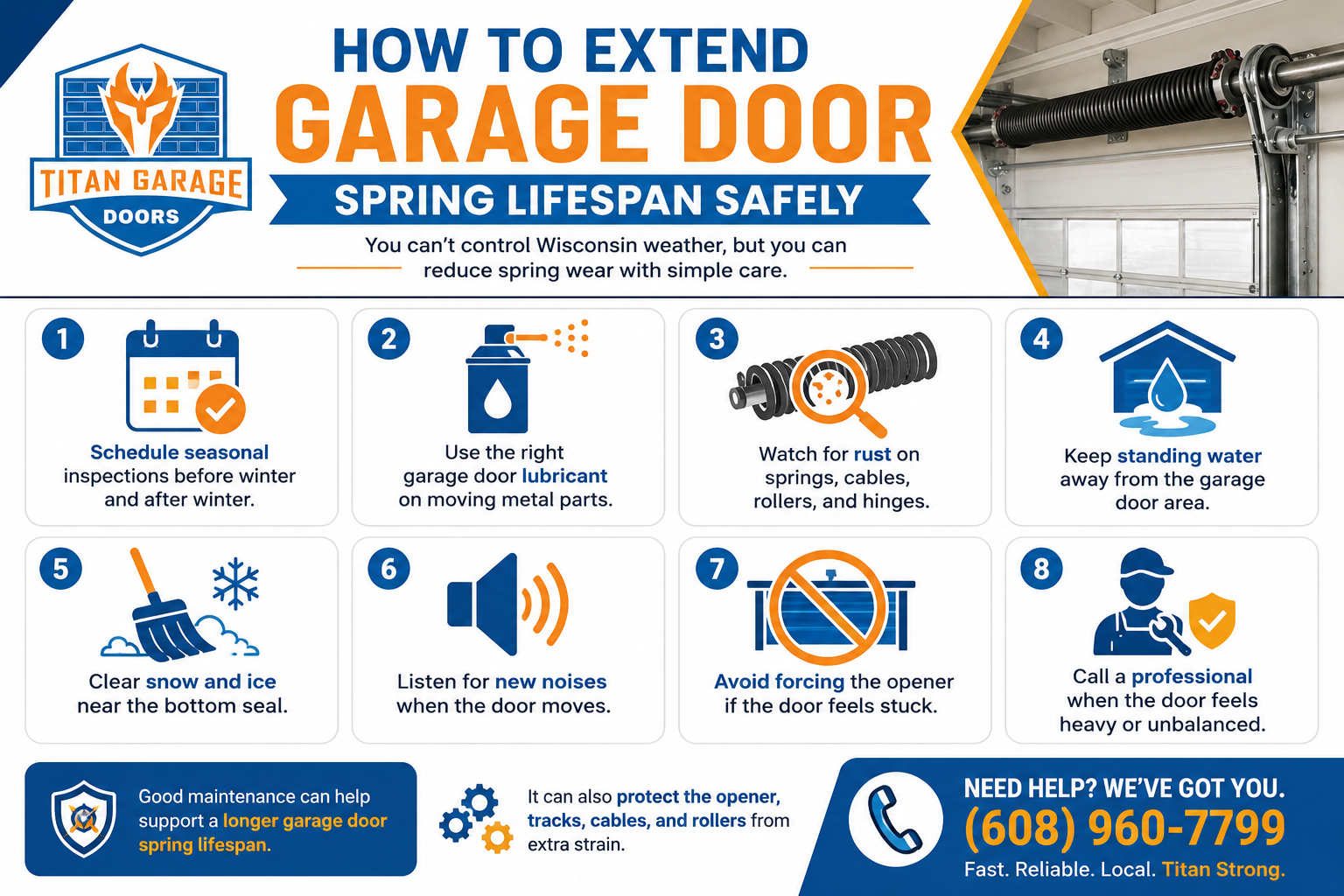
You cannot control Wisconsin weather, but you can reduce spring wear with simple care. Small steps can make a big difference over time.
Here are smart ways to protect your garage door spring:
- Schedule seasonal inspections before winter and after winter.
- Use the right garage door lubricant on moving metal parts.
- Watch for rust on springs, cables, rollers, and hinges.
- Keep standing water away from the garage door area.
- Clear snow and ice near the bottom seal.
- Listen for new noises when the door moves.
- Avoid forcing the opener if the door feels stuck.
- Call a professional when the door feels heavy or unbalanced.
Good maintenance can help support a longer garage door spring lifespan. It can also protect the opener, tracks, cables, and rollers from extra strain.
Garage Door Spring Lifespan FAQs
How long do garage door springs last in Wisconsin?
Garage door springs are rated by cycles, but local weather can affect how long they last. Cold weather, rust, humidity, heavy use, and poor maintenance can all shorten their lifespan. If the door feels heavy or moves unevenly, schedule an inspection.
Which Wisconsin season is hardest on garage door springs?
Winter is usually the hardest season. Freezing temperatures, snow, ice, and stiff garage door parts add stress to the spring. However, spring moisture, summer humidity, and fall temperature drops can also cause wear.
Can road salt damage garage door springs?
Yes. Road salt can speed up rust when it mixes with melting snow and moisture inside the garage. Over time, that corrosion can weaken springs and other metal parts.
Should I replace my garage door spring before winter?
If the spring is old, rusty, noisy, or struggling to lift the door, a pre-winter replacement may prevent a sudden breakdown. A fall inspection is a smart choice for Wisconsin homeowners.
Is it safe to use my garage door with a rusty spring?
Light surface rust may not mean immediate failure, but heavy rust is a warning sign. If the door feels heavy, moves unevenly, or the spring looks damaged, stop using the door and call a professional.
Conclusion
Wisconsin weather affects garage door springs in every season. Winter cold adds pressure. Spring rain and road salt bring rust risk. Summer humidity keeps metal parts damp. Fall temperature drops can expose a weak spring before the next freeze.
The best way to protect garage door spring lifespan is to act early. Watch for warning signs, schedule seasonal maintenance, and avoid forcing the door when something feels wrong.
Schedule Your Free Garage Door Spring Inspection Today
If your garage door feels heavy, sounds loud, or struggles during Wisconsin weather, do not wait for the spring to snap. Call Titan Garage Doors WI at (608) 960-7799 today and ask for a Free Estimate. Our team can inspect your garage door springs, explain your options clearly, and help keep your garage door safe, smooth, and ready for every Wisconsin season. We also offer convenient monthly payment plans for qualified customers, making it easier to get the garage door spring repairs or replacement services you need.