HAVE ANY QUESTIONS?
  15 YEARS OF EXPERIENCE

A noisy garage door can change the way your whole home feels. What starts as a light squeak can turn into rattling, shaking, scraping, or a grinding opener that sounds strained every time the door moves. The door may still open and close, but the sound often means the system is working harder than it should.
For homeowners in Stoughton, WI, garage doors deal with cold mornings, summer dust, road grit, fall leaves, moisture, and daily use. Homes near Downtown Stoughton, Lake Kegonsa, and nearby neighborhoods often use the garage as a main entry point, so the door runs several times a day. That steady use can wear down rollers, loosen hardware, dry out moving parts, and add stress to the opener.
Why Garage Doors Get Louder With Age and Daily Use
A garage door uses several moving parts during every cycle. Rollers guide the door through the tracks, hinges help the panels bend, springs help carry the door’s weight, and the opener moves the system up and down. When one part starts wearing down, the rest of the system feels the added strain. That is why one small sound can grow into a louder problem over time.
Here is a simple way to understand what your garage door may be telling you:
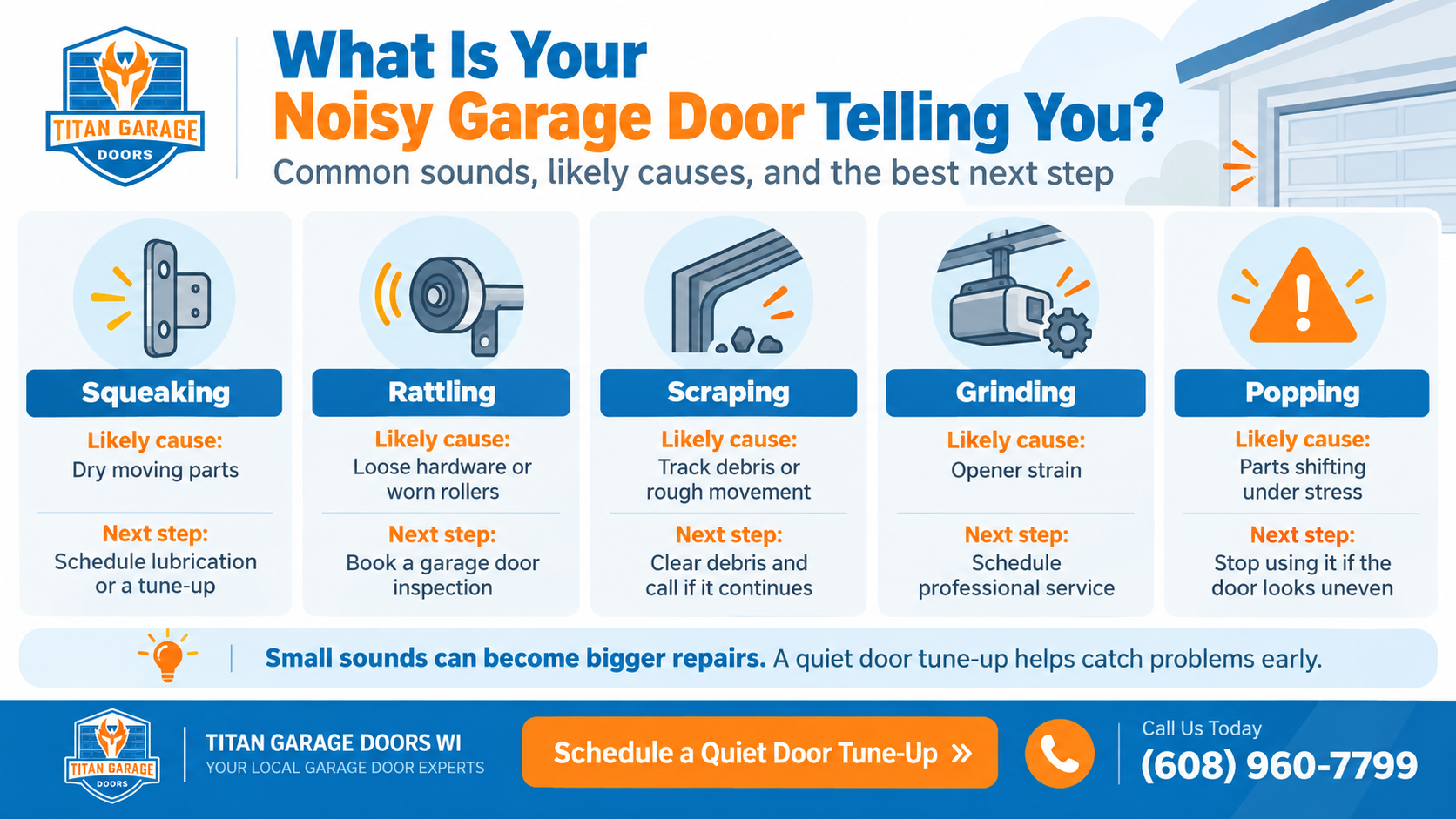
Note: This sound guide does not replace a professional inspection, but it can help you know when a sound needs attention.
Common Reasons Your Garage Door Gets Louder
Most garage door noise comes from wear, friction, or movement problems. The cause is not always obvious from the driveway, but these are the issues homeowners see most often.
1. Worn Rollers Add Rattle and Shake
Worn rollers are one of the most common causes of loud garage door operation. These small wheels help the door move through the tracks. When they crack, rust, wobble, or stop spinning smoothly, the door can rattle, scrape, or shake during movement.
This problem often worsens because the opener must work harder to move the door. Instead of gliding smoothly, the door drags along the track and creates extra noise.
2. Dry Moving Parts Cause Squeaking
A squeaky garage door often points to dry moving parts. Hinges, rollers, bearings, and springs all move during operation, so they need the right care to reduce friction.
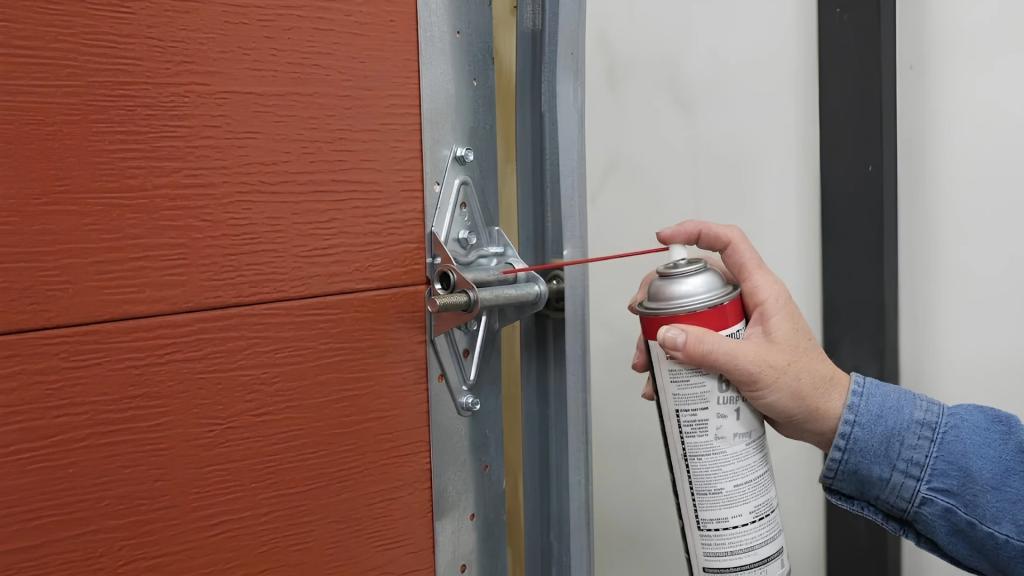
Lubrication can help, but too much product can collect dirt and leave sticky buildup. Use a garage-door-safe lubricant on approved moving parts, and avoid spraying heavy grease inside the tracks.
3. Loose Hardware Creates Rattling
Garage doors move with force, and that movement can loosen hardware over time. Hinges, brackets, bolts, and fasteners can shift after years of daily use. Once those parts loosen, the door may rattle, vibrate, or sound unstable.
You can look at the door from a safe distance, but you should not adjust springs, cables, or bottom brackets. These parts carry tension and can be dangerous without proper training.
4. Track Debris Makes Movement Rough
Dirt, leaves, road grit, and cobwebs can collect around the track area, especially during Wisconsin fall weather. When rollers pass through a dirty or rough area, the door may scrape, pop, or move unevenly.
Keeping the track area clear can help, but homeowners should not bend, loosen, or adjust the tracks. For more seasonal maintenance tips, read How to Prepare Your Garage Door for Fall Weather.
5. A Grinding Opener Signals Extra Strain
A grinding opener does not always mean the opener is the only problem. In many cases, the opener gets louder because the garage door has become harder to move.
Worn rollers, dry parts, loose hardware, and track resistance can all make the opener work harder than normal. The opener should guide the door through a smooth cycle. When it sounds strained, the door needs a closer look.
What You Can Do About a Noisy Garage Door
Homeowners can take a few safe steps before scheduling service. These checks can help you understand the problem without touching dangerous parts.
Try these simple checks:
- Listen to the type of sound. Squeaking, rattling, scraping, and grinding can point to different issues.
- Clear leaves, dirt, and stored items away from the track area.
- Watch the door move from a safe distance while someone else uses the opener.
- Look for shaking, uneven movement, or a door that seems to struggle.
- Use a light amount of garage-door-safe lubricant on approved moving parts.
- Stop using the door if it looks crooked, stuck, or unsafe.
However, avoid removing rollers, loosening brackets, adjusting cables, or touching springs on your own—these parts require professional care. If you’re unsure whether your door needs maintenance or repair, our guide Garage Door Repair vs Maintenance: What Saves More? can help you decide the best next step.
Noisy Garage Door: When Expert Help Is Needed
A noisy garage door does not always need emergency garage door repair. However, some warning signs should not wait.
Call for professional garage door service when:
- The door grinds, scrapes, or pops loudly.
- The door shakes hard during movement.
- The opener runs, but the door struggles to move.
- The rollers look cracked, rusty, loose, or stuck.
- The door hangs unevenly or looks crooked.
- The noise gets worse each week.
- The door will not close securely.
Waiting too long can turn a small maintenance issue into a larger garage door repair Wisconsin homeowners would rather avoid. A professional garage door inspection can identify the source of the sound and show whether the door needs lubrication, adjustment, part replacement, or urgent repair. Book your noisy garage door inspection before winter hits.
How Annual Garage Door Tune-Ups Help Keep Noise Down
An annual garage door tune-up gives the system the attention it needs before small noises turn into bigger problems. Instead of waiting for squeaking, rattling, or grinding to get worse, a technician checks the parts that affect sound, movement, and daily reliability.
During a tune-up, the technician can inspect the rollers, hinges, tracks, opener, safety sensors, weather seal, and hardware. This helps identify worn rollers, loose parts, dry moving points, and opener strain before they lead to a repair call.
A yearly garage door tune-up can help:
- Reduce squeaking, rattling, and rough movement
- Keep the door moving more smoothly
- Catch worn rollers before they damage nearby parts
- Lower extra strain on the garage door opener
- Find loose hinges, brackets, or hardware early
- Improve safety sensor performance
- Help prevent surprise garage door repair calls
This type of garage door maintenance works best when the door still opens and closes but starts sounding louder than usual. A planned tune-up gives homeowners a chance to fix small issues before the door becomes stuck, uneven, or unsafe to use.
Frequently Asked Questions
Why is my garage door suddenly louder than before?
Your garage door may sound louder because rollers, hinges, opener parts, or other moving components have started wearing down. Dirt, dry parts, loose hardware, and track resistance can also increase noise.
Can I lubricate a noisy garage door myself?
You can lubricate some visible moving parts with a garage-door-safe lubricant. However, you should not adjust springs, cables, or brackets because those parts can cause serious injury without proper training.
Does a noisy garage door always need repair?
A noisy garage door does not always need major repair. Routine garage door maintenance can reduce many squeaks and rattles. Repair becomes more likely when the door shakes, grinds, hangs crooked, or refuses to close.
Are worn rollers a common cause of garage door noise?
Yes, worn rollers commonly cause garage door noise. Damaged rollers can rattle, scrape, wobble, or make the door move roughly through the tracks.
When should I call for emergency garage door repair?
You should call for emergency garage door repair when the door is stuck open, stuck closed, off track, hanging crooked, or unsafe to move. Do not keep pressing the opener when the door does not move correctly.
Do Not Ignore a Garage Door That Keeps Getting Louder
A noisy garage door is more than an everyday annoyance. The sound can point to worn rollers, dry moving parts, loose hardware, dirty tracks, opener strain, or seasonal wear. When you address the noise early, you give the system a better chance to keep moving safely and smoothly.
You do not need to wait until the door fails. If the sound keeps getting louder, schedule a professional garage door inspection and find out what the door needs before a small issue becomes an urgent repair.
Schedule a Quiet Door Tune-Up in Stoughton, WI
Is your garage door squeaking, rattling, grinding, or waking up the house? Titan Garage Doors WI can inspect the system, find the source of the noise, and recommend the right service before the problem gets worse.
Our annual garage door tune-ups help Stoughton-area homeowners reduce daily noise, protect the opener, and keep the garage door moving smoothly through Wisconsin’s changing seasons.
Call 608-960-7799 today to schedule garage door service with Titan Garage Doors WI, and ask about our flexible payment plans designed for Wisconsin homeowners.