A garage door can stop working at the worst possible time. You may be leaving for work, coming home with groceries, or trying to close the garage before a cold Wisconsin night settles in. One press of the remote should be simple, but the door stays open, refuses to move, reverses, or gets stuck halfway. When that happens, it helps to know what to check first and what to leave alone. These emergency garage door tips can help Stoughton homeowners stay safe, avoid making the problem worse, and know when to call Titan Garage Doors WI for help.
Start With Safety Before You Touch Anything
Before you test anything, take a minute to look at the door from a safe distance. Does the door look crooked? Is one side lower than the other? Do you see a broken garage door spring above the door or a snapped garage door cable near the sides?
If the answer is yes, stop there. Do not pull the emergency release, do not keep pressing the opener, and do not try to lift the door by hand. A damaged garage door can be heavier and less stable than it looks.
For homes near Downtown Stoughton, Lake Kegonsa, or nearby neighborhoods where the garage often serves as the main entrance, a stuck door can feel urgent. Still, safety comes first. A few extra minutes of caution can prevent a small repair from becoming a dangerous situation.
Use this quick safety checklist to decide what you can check safely and when you should stop using the door.
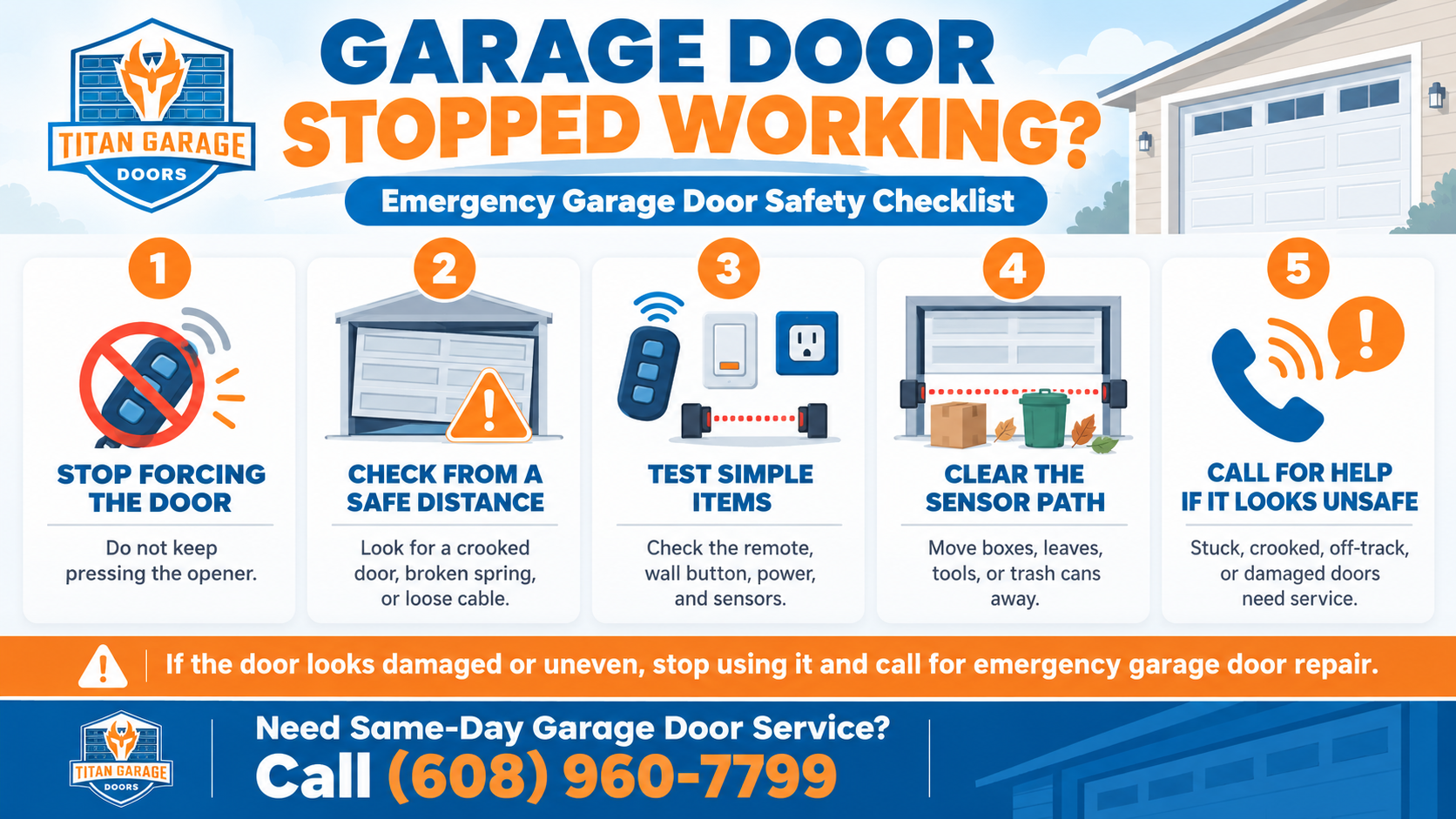
Once you know the door looks safe enough to check, start with the simple items first: the remote, wall button, opener power, and sensors.
Why Your Garage Door May Stop Working Suddenly
A garage door can stop for several reasons. Some issues are simple, while others need trained service right away. The key is knowing the difference.
Common causes include:
- Dead remote batteries
- Blocked or dirty safety sensors
- Misaligned garage door sensors
- Power loss to the opener
- Broken garage door spring
- Snapped garage door cable
- Damaged rollers or tracks
- Opener strain or failure
- Ice, debris, or an object blocking the door path
A garage door won’t close when the safety sensors detect a blockage or lose alignment. Meanwhile, a garage door won’t open when the opener lacks power, the spring breaks, or the door becomes too heavy for the opener to move. If your garage door is stuck, start with the safe checks below.
Step 1: Check the Remote, Wall Button, and Power
Start with the easiest checks first. Press the wall button inside the garage. If the wall button works but the remote does not, the remote may need new batteries or reprogramming.
Next, check whether the opener has power. Look for a light on the motor unit. If the opener looks completely dead, check the outlet and breaker. Do not open the opener housing or touch wiring.
If the opener has power and the door still does not move, move on to the safety sensors.
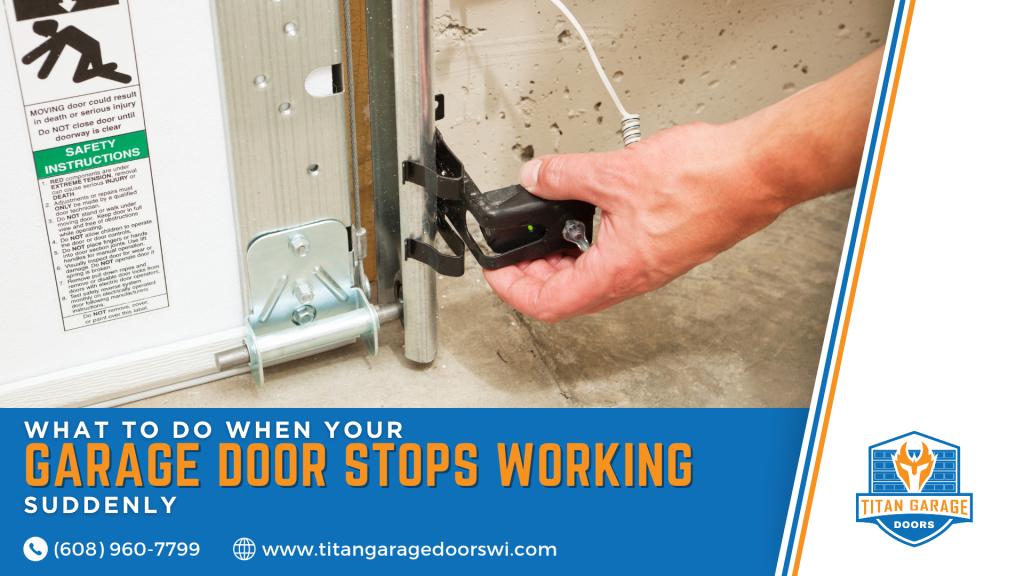
Step 2: Test the Garage Door Sensors Safely
Garage door sensors sit near the bottom of the door tracks. They help stop the door from closing on a person, pet, car, or object. When the sensors cannot “see” each other, the door may reverse or refuse to close.
Use these safe sensor checks:
- Look near the floor on both sides of the garage door.
- Remove boxes, tools, leaves, or trash cans from the sensor path.
- Wipe the sensor lenses gently with a clean cloth.
- Check whether both sensor lights are on.
- Look for a sensor that appears bumped, tilted, or loose.
- Try closing the door again from a safe spot.
If the door starts to close and then reverses, the sensors may still be blocked or misaligned. If one sensor light blinks or stays off, the opener may not be receiving the right signal.
Do not tape sensors, bypass them, or hold the wall button down to force the door closed. Safety sensors are there for a reason. If they keep failing, schedule garage door service before someone gets hurt or the door causes damage.
Step 3: Look for Signs of a Broken Spring or Cable
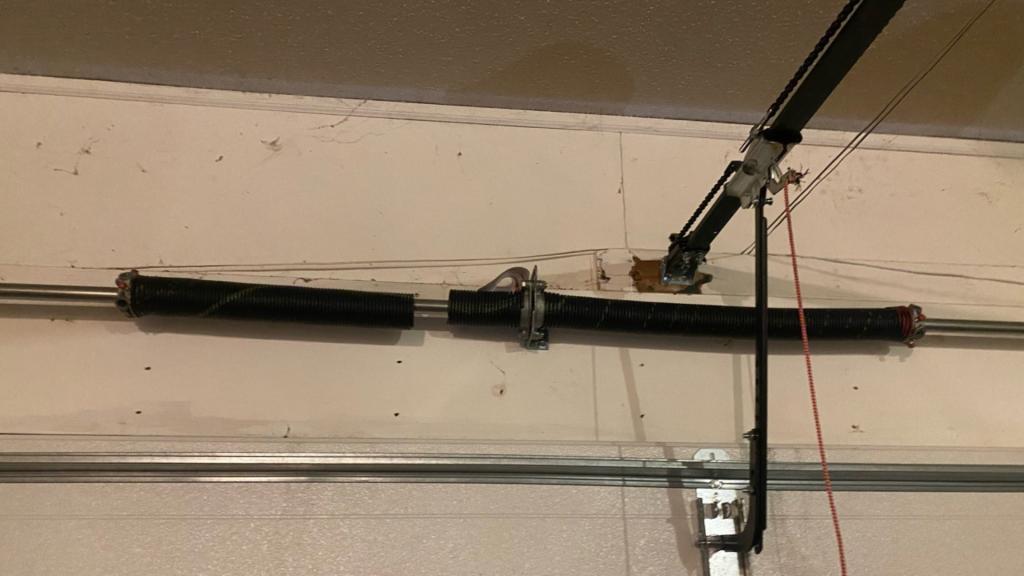
A broken garage door spring can make the door feel extremely heavy. You may hear a loud bang when the spring breaks, or you may notice a visible gap in the spring above the door. When a spring breaks, the opener may hum, strain, or lift the door only a few inches.
Meanwhile, a snapped garage door cable can also make the door unsafe. You may see a loose cable hanging near the track, a cable wrapped poorly near the drum, or one side of the door sitting lower than the other.
If you see these signs, do not use the door:
- A visible gap in the spring
- Loose or hanging cable
- Door sitting unevenly
- Door lifting only a few inches
- Opener straining without moving the door
- Door slamming or dropping too fast
These problems need emergency garage door repair. Springs and cables carry tension, and they should only be handled by trained technicians.
Step 4: Check for Track, Roller, or Obstruction Problems
Sometimes a garage door stops because something blocks the path. Look for objects near the tracks, under the door, or beside the rollers. A shovel, bike, storage bin, or piece of debris can stop the door from closing.
If you see a small object in the way, remove it only when the door is fully stopped and safe. Do not place your hands near rollers, hinges, cables, or track openings.
You should call for same-day garage door service if the door looks off track, the rollers have popped out, or the panels look twisted. Forcing an off-track door can bend the tracks, damage the opener, and make the repair more expensive.
What Not to Do in a Garage Door Emergency
When a garage door suddenly malfunctions, it is natural to panic. But rushing often leads to unsafe choices. Some of the most useful emergency garage door tips are about what not to do when the door looks stuck, crooked, or damaged.
Protect yourself and your home by avoiding these mistakes:
- Don’t keep pressing the opener. Repeated attempts can strain the motor and worsen damage.
- Don’t pull the emergency release if the door looks crooked, jammed, or damaged.
- Don’t attempt spring or cable repairs. These parts are under extreme tension and can cause serious injury.
- Don’t force the door by hand. Forcing it can bend tracks or snap hardware.
- Don’t stand beneath a stuck or uneven door. It could fall suddenly.
- Don’t bypass safety sensors. They’re designed to prevent accidents.
- Don’t ignore a door that won’t close securely. Leaving it open exposes your home to risks.
Whether your car is trapped inside or your home feels exposed, the safest move is to pause, check only simple items (like remotes or obstructions), and call a professional if the door shows signs of damage.
When to Call for Emergency Garage Door Repair
Some issues can wait for a scheduled tune-up, but others need faster help. Contact Titan Garage Doors WI when the door creates a safety, security, or access problem.
These emergency garage door tips can help you decide when the problem is no longer a simple homeowner check.
You should request emergency garage door repair when:
- The garage door is stuck open or stuck closed.
- The door hangs crooked or uneven.
- A spring looks broken.
- A cable has snapped or come loose.
- The opener runs, but the door does not move.
- The door came off track.
- The door will not close before night or bad weather.
- You feel unsure about using the door safely.
During Wisconsin winters, a stuck garage door can quickly affect your routine. Snow, wind, cold air, and security concerns can all make the issue more urgent. Same-day garage door service helps protect your home and gives you a clear answer about what failed.
FAQs: Garage Door Emergencies
What should I check first when my garage door stops working?
Start with the wall button, remote batteries, opener power, and safety sensors. Stop checking if the door looks crooked, damaged, or unsafe.
Why won’t my garage door close all the way?
Your garage door may not close because the sensors are blocked, dirty, or misaligned. It may also stop closing if the track, rollers, opener, or door balance has a problem.
Why won’t my garage door open?
Your garage door may not open because the opener has no power, the spring broke, the cable snapped, or the door became too heavy for the opener to lift.
Can I pull the emergency release cord?
You should only pull the emergency release when the door is fully closed and looks stable. Do not pull it if the door is stuck open, crooked, off track, or supported by damaged parts.
Is a broken garage door spring an emergency?
Yes, a broken spring can create a serious safety issue. Do not try to lift the door or replace the spring yourself.
Conclusion: Stay Safe and Follow These Emergency Garage Door Tips
When a garage door stops working suddenly, your first job is not to fix every part. Your first job is to stay safe, check simple issues, and avoid forcing a damaged system.
These emergency garage door tips can help you rule out basic sensor, remote, and power issues. However, a stuck, crooked, broken, or unsafe door needs professional service. If the door does not move normally, stop using it and get help before the damage spreads.
Need Emergency Garage Door Help in Stoughton, WI?
If your garage door is stuck, will not close, will not open, or looks unsafe, Titan Garage Doors WI is ready to help. Our team can inspect the problem, explain the safest next step, and provide emergency garage door repair when your home needs fast attention.
Call Titan Garage Doors WI today at (608) 960-7799 to schedule same-day garage door service and get your garage door working safely again.