HAVE ANY QUESTIONS?
 15 YEARS OF EXPERIENCE

Have you noticed a cold breeze inside your garage even when the door is fully closed? November winds in Stoughton, WI, can make those drafts harder to ignore, especially when cold air slips through gaps along the sides or top of the door. Your garage door weather stripping should help block outside air, but worn seals or a door that no longer closes evenly can leave openings. The good news is that you can spot many of these problems without taking anything apart.
Here’s where to look and how to tell whether the seals or the door itself need attention.
Why Garage Door Weather Stripping Starts Letting Air In
Weather stripping creates a flexible barrier between your garage door and the surrounding frame. The material presses against the closed door to reduce gaps where wind, moisture, and debris can enter. Over time, repeated movement and exposure to changing temperatures can leave the material cracked, loose, or permanently compressed. Even a small opening may become noticeable when strong winds blow against the garage.
For homeowners near Downtown Stoughton, Lake Kegonsa, and nearby Wisconsin communities, November is a practical time to check for drafts before colder winter conditions arrive. The first step is knowing where air can enter.
How to Check Garage Door Weather Stripping for Air Leaks
You don’t need specialized tools to begin checking for garage door air leaks. A flashlight and a small piece of lightweight tissue can help identify suspicious areas.
Before starting, make sure the door is fully closed and stable. Keep the opener inactive during your inspection, and stay away from springs, cables, rollers, and other moving hardware. Follow your garage door manufacturer’s safety instructions and never place your fingers between the door and its frame.
Once the door is safely closed, inspect these areas.
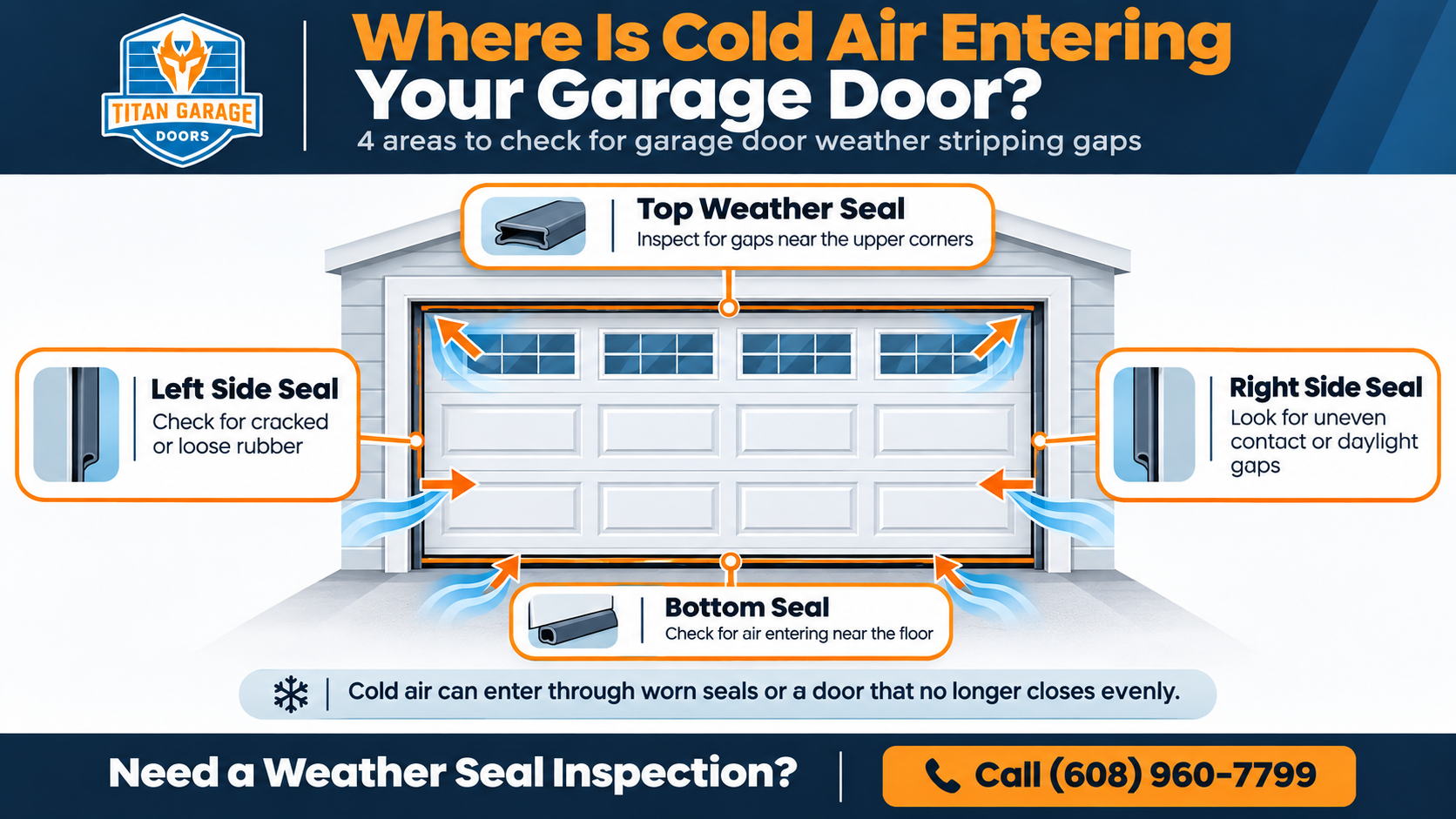
1. Look for Gaps Along the Garage Door Side Seals
Start with the vertical edges where the garage door meets the frame. Garage door side seals usually have flexible rubber or vinyl flaps that rest against the closed door. From inside the garage, check whether the material maintains consistent contact from top to bottom.
Look for:
- Visible daylight along either side
- Cracked or curled weather stripping
- Loose sections pulling away from the frame
- Areas where the rubber no longer touches the door
If the seal looks intact but a gap appears near one corner, the door may not be sitting squarely within the opening.
2. Inspect the Garage Door Top Seal
Cold air can also enter through the narrow space between the top panel and the garage frame. Look upward from a safe position on the floor. Does the garage door top seal touch the panel evenly, or can you see daylight near the corners?
A worn top seal may curl away from the door or lose flexibility after years of exposure. However, gaps can also develop when the upper panel doesn’t close against the frame correctly.
Avoid climbing a ladder to reach the seal or adjusting the tracks yourself. If the problem sits beyond your reach, arrange a professional inspection.
3. Use a Tissue to Locate Garage Door Air Leaks
Some drafts are difficult to see, especially when the weather stripping looks fine from a distance.
On a windy day, hold a small strip of tissue near the accessible side of the closed door. Watch whether it flutters when you move it close to the frame. If the tissue moves consistently near one section, outside air may be passing through that opening.
Repeat the check at other safely reachable spots, keeping your hands clear of door gaps and hardware. Remember that air movement can also come from nearby vents or another opening, so the tissue test provides a clue rather than a confirmed diagnosis.
4. Compare Both Sides of the Garage Door
After checking the seals, look at the door as a whole. Does one side sit noticeably closer to the frame? Are there larger gaps near the top than near the bottom? Perhaps the weather stripping makes good contact on the left but barely touches the right side. These differences can help identify whether the issue involves the weather seal or the way the door sits.
If you notice uneven panels, scraping noises, or a door that struggles to close, stop operating it and contact a garage door expert.
Is It a Worn Weather Stripping or a Garage Door Alignment Problem?
A draft doesn’t always mean you need new weather stripping. Sometimes, the rubber remains in good condition, but the garage door no longer meets the frame correctly. Knowing the difference matters because replacing the seal won’t correct damaged tracks, loose hardware, or an uneven door.
| What You Notice | Possible Cause | Recommended Action |
|---|---|---|
| Cracked or brittle rubber | Worn weather stripping | Inspect for seal replacement |
| Loose or curled side seal | Damaged or poorly fitted seal | Check attachment and fit |
| Uneven gaps around the door | Door alignment problem | Schedule professional inspection |
| Door scrapes or closes unevenly | Track or hardware issue | Request garage door repair |
| Draft remains after seal replacement | Poor door fit or another air leak | Inspect the complete opening |
Garage door seal replacement makes sense when the rubber has deteriorated or no longer maintains proper contact. However, when the opening looks uneven or the door struggles to move, the problem may require more than garage weather sealing.
For a closer look at the available materials, read our previous article, Types of Seals Used in Garage Door Weather Stripping. It explains how bottom seals, threshold seals, side and top weather seals, and panel seals serve different purposes.
What to Do After Finding an Air Leak in Your Garage Door
Once you know where the draft is coming from, the next step depends on the seal’s condition.
If the weather stripping is intact but covered with dirt, gently clean the accessible surface with mild soapy water while the door stays closed. Removing buildup may help the flexible material make better contact. For damaged rubber or uneven gaps, professional service can help determine the right repair.
However, avoid forcing weather stripping tighter against the door or changing the opener’s closing settings to eliminate a draft. Excessive pressure can interfere with smooth operation and create additional problems.
The U.S. Department of Energy recommends checking doors for gaps and deteriorated weather stripping when identifying unwanted air leaks. Keep in mind that an attached garage may also have drafts around its windows, walls, or entry door.
If you noticed cold air entering underneath the door, our recent guide, How to Check Your Garage Door Bottom Seal for Damage, explains how to identify cracks, flattened rubber, and daylight gaps along the floor.
How Titan Garage Doors WI Helps Prevent Garage Door Drafts
At Titan Garage Doors WI, we check more than the weather stripping when homeowners report drafts around their garage doors. Our technicians inspect the seals, their contact with the door, and the condition of the surrounding hardware. If the door sits unevenly or doesn’t close properly, we look for the cause before recommending a solution.
Depending on what we find, the work may involve replacing worn seals, correcting door alignment, or addressing damaged components. Our garage door maintenance services help Stoughton homeowners identify developing problems before they interfere with daily use. When the issue involves tracks, rollers, or other mechanical components, our garage door repair services can address the underlying problem.
Regular inspections also support garage door draft prevention by catching worn materials before they leave larger openings.
FAQs About Garage Door Weather Stripping and Air Leaks
Can garage door side seals wear out?
Yes. Years of opening and closing, sunlight, and temperature changes can make side seals brittle or loose. Once the material stops making proper contact, drafts may develop.
Why does my garage door have gaps even with new weather stripping?
Uneven gaps may come from poor door alignment, damaged hardware, or an improperly fitted seal. A technician can check whether the door closes squarely before recommending another replacement.
Will garage door weather stripping keep my garage warm?
Weather stripping helps reduce unwanted airflow, but it cannot heat the garage or replace insulation. The overall comfort of an attached garage also depends on its walls, ceiling, and other openings.
How often should I inspect garage door weather stripping?
Check it at least twice a year, especially before winter and after colder weather. Additional inspections make sense whenever you notice new drafts, visible damage, or moisture entering the garage.
Schedule Garage Door Weather Stripping Maintenance in Stoughton, WI
Cold November winds can quickly reveal gaps that went unnoticed during warmer months. If your garage door weather stripping no longer seals properly, Titan Garage Doors WI can help find the source of the draft and recommend the right solution.
We provide weather seal inspections, garage door maintenance, and repair services for homeowners throughout Stoughton, McFarland, Fitchburg, and nearby Wisconsin communities. Our team checks the condition of your door, explains what needs attention, and provides a clear estimate before work begins.
We also offer payment plans for qualifying customers on eligible services. You may qualify for our current garage door discounts and special offers. Visit our website to review the available promotions and terms, and mention your offer before service begins.
Call (608) 960-7799 today to schedule a professional garage door weather seal inspection with Titan Garage Doors WI and keep cold drafts from becoming a bigger problem this winter.